Tieguanyin Tea Explained: Taste, Origin, and Brewing Guide
Tieguanyin tea, often translated as Iron Goddess of Mercy tea, is one of the most famous Chinese oolong teas in the world. Known for its floral fragrance, smooth texture, and complex flavor, Tieguanyin occupies a special place in the history of Chinese tea culture.
Originating from Anxi County in Fujian Province, this tea has been cultivated and refined for centuries. Today, Tieguanyin is considered one of the Ten Famous Chinese Teas, widely appreciated by both beginners and experienced tea drinkers.
This guide explores everything you need to know about Tieguanyin tea, including its history, flavor profile, processing methods, brewing techniques, and how to choose high-quality leaves.
The Origin of Tieguanyin Tea
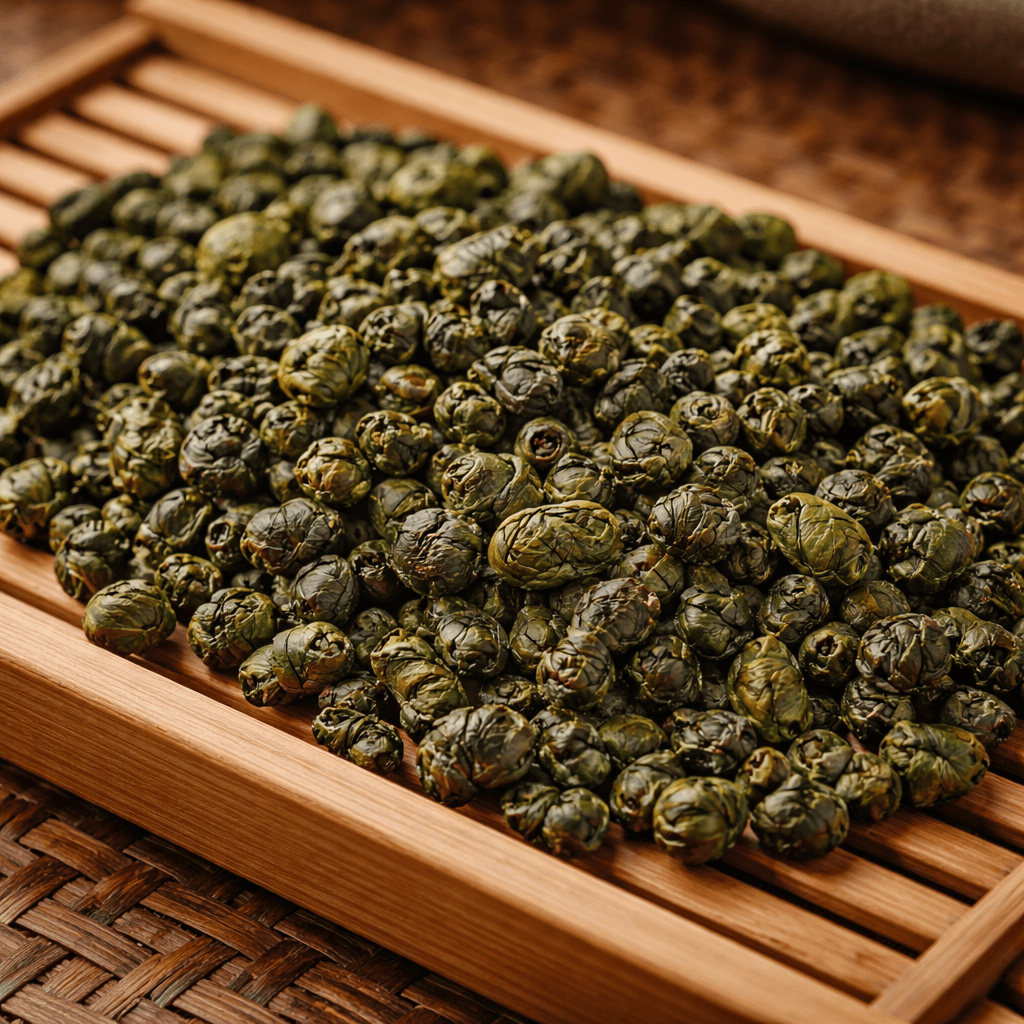
Tieguanyin tea originated in Anxi County, Fujian Province, an area famous for producing high-quality oolong teas.
The region’s mountainous terrain, humid climate, and mineral-rich soil create ideal conditions for tea cultivation. The tea plants grown in Anxi produce leaves with distinctive aromatic compounds that contribute to the tea’s signature floral fragrance.
According to legend, the name Tieguanyin comes from Guanyin, the Bodhisattva of compassion in Chinese Buddhist tradition.
One popular story tells of a poor farmer who regularly cared for an abandoned Guanyin temple. One night, the goddess appeared in his dream and led him to a tea plant hidden behind the temple. The farmer cultivated the plant and discovered that it produced extraordinary tea. In gratitude, he named the tea Tieguanyin, meaning “Iron Goddess of Mercy.”
What Type of Tea Is Tieguanyin?
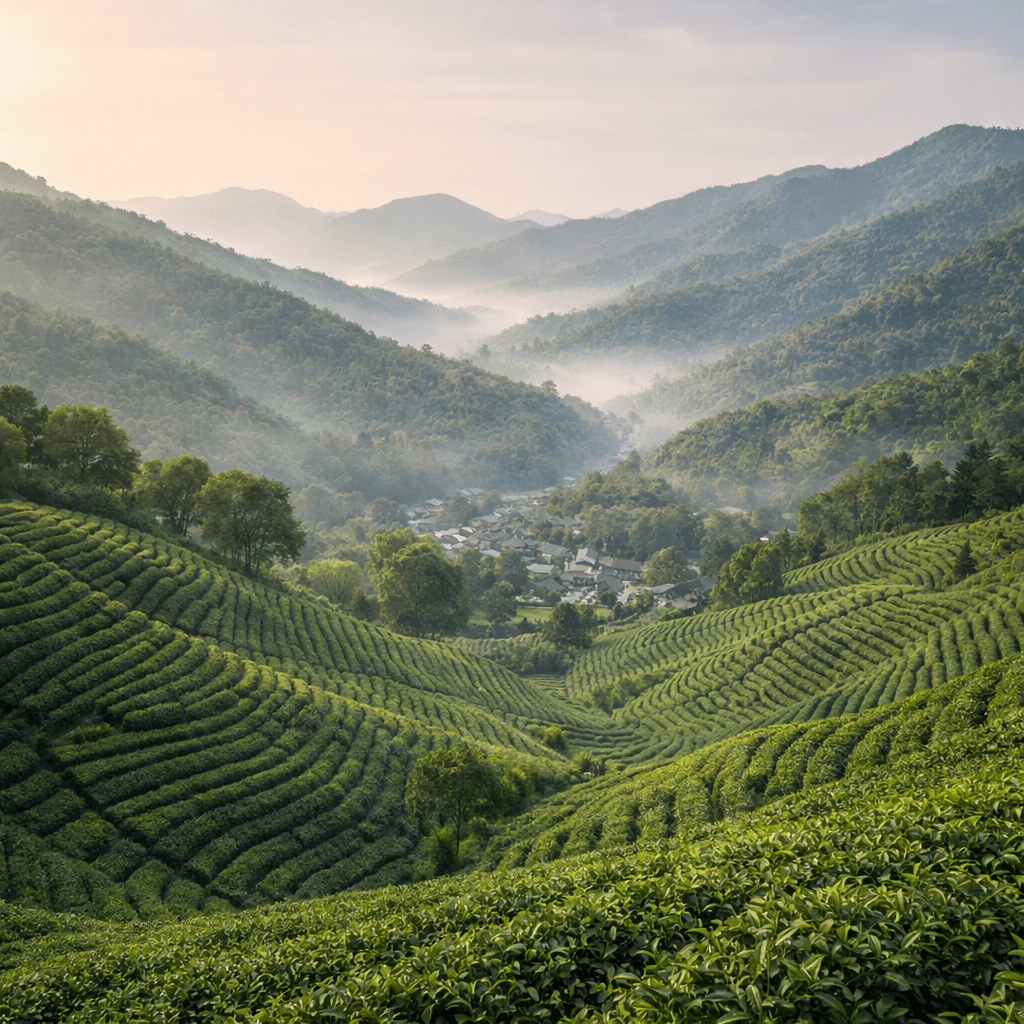
Tieguanyin belongs to the category of oolong tea, which is partially oxidized tea.
Oolong teas sit between green tea and black tea in terms of oxidation level. This means they combine the freshness of green tea with the depth and complexity of black tea.
Tieguanyin is usually processed with an oxidation level between 15% and 40%, depending on the style.
There are two main modern styles of Tieguanyin:
Traditional Tieguanyin
- darker leaves
- roasted aroma
- mineral notes
- deeper flavor complexity
Modern Anxi Style
- bright green leaves
- intense orchid fragrance
- lighter, fresher taste
Both styles are widely enjoyed, though the modern floral style is the most common in international markets.
The Flavor Profile of Tieguanyin Tea
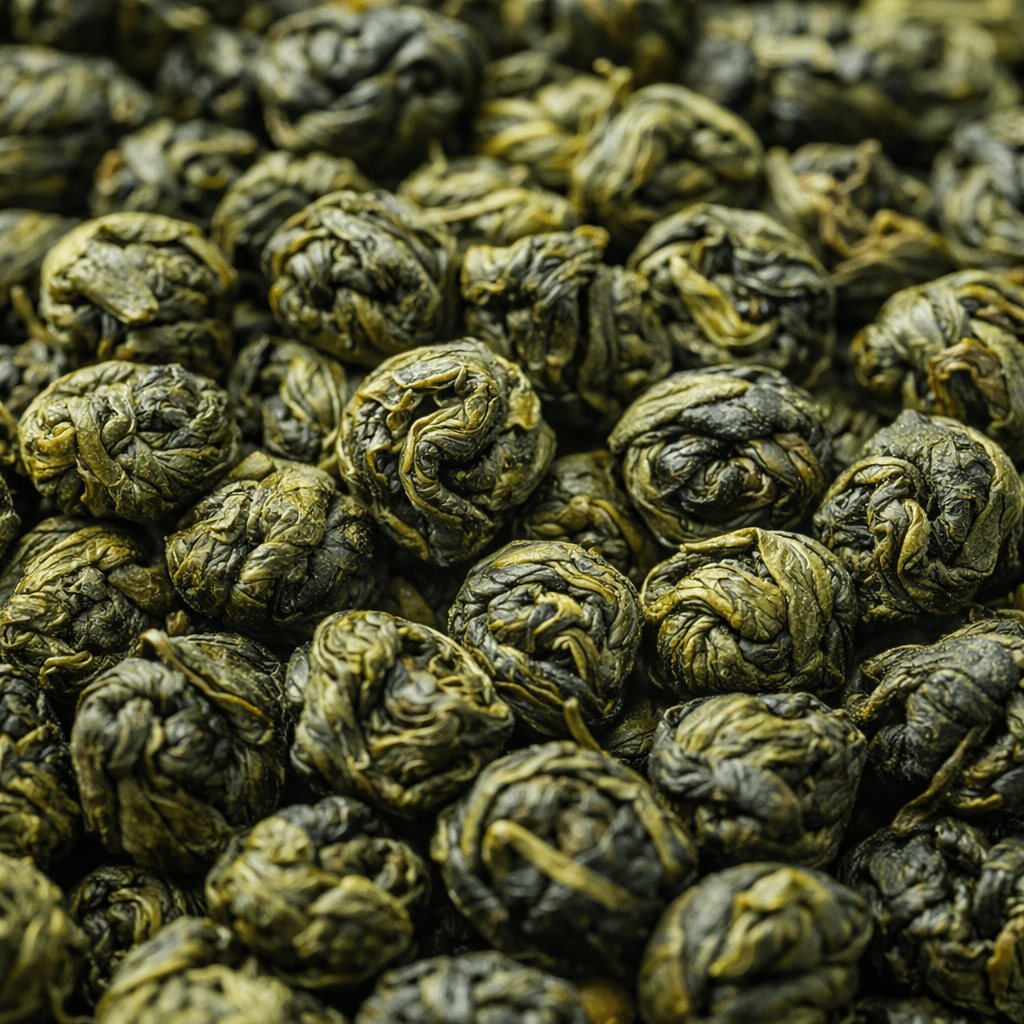
Tieguanyin tea is famous for its layered aroma and smooth taste.
Common flavor notes include:
- orchid
- lilac
- fresh cream
- sweet grass
- honey
- roasted nuts (traditional style)
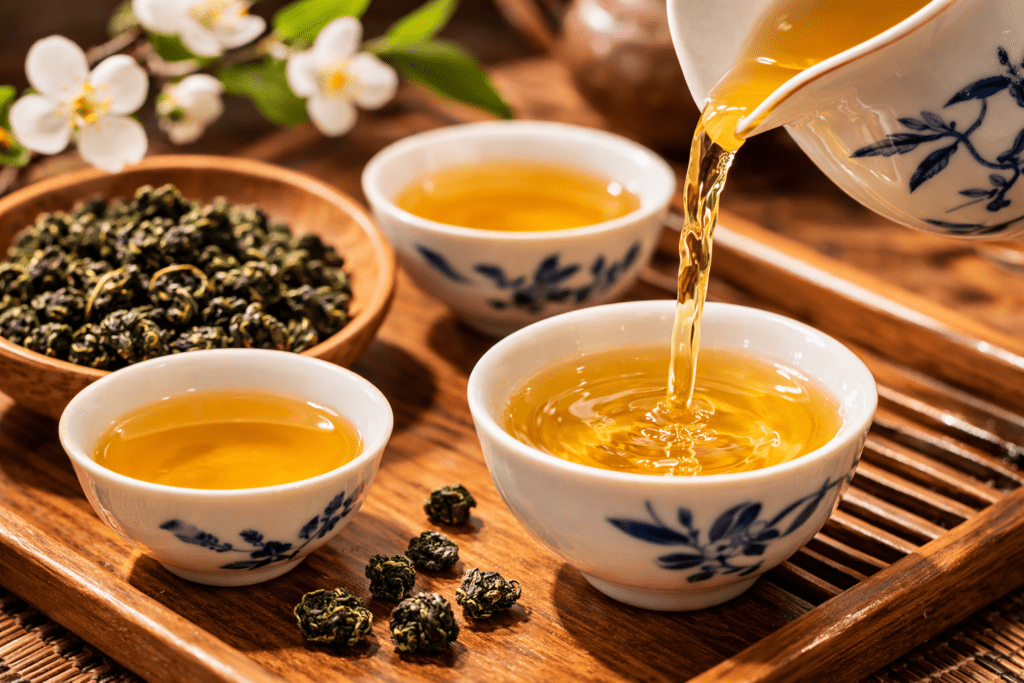
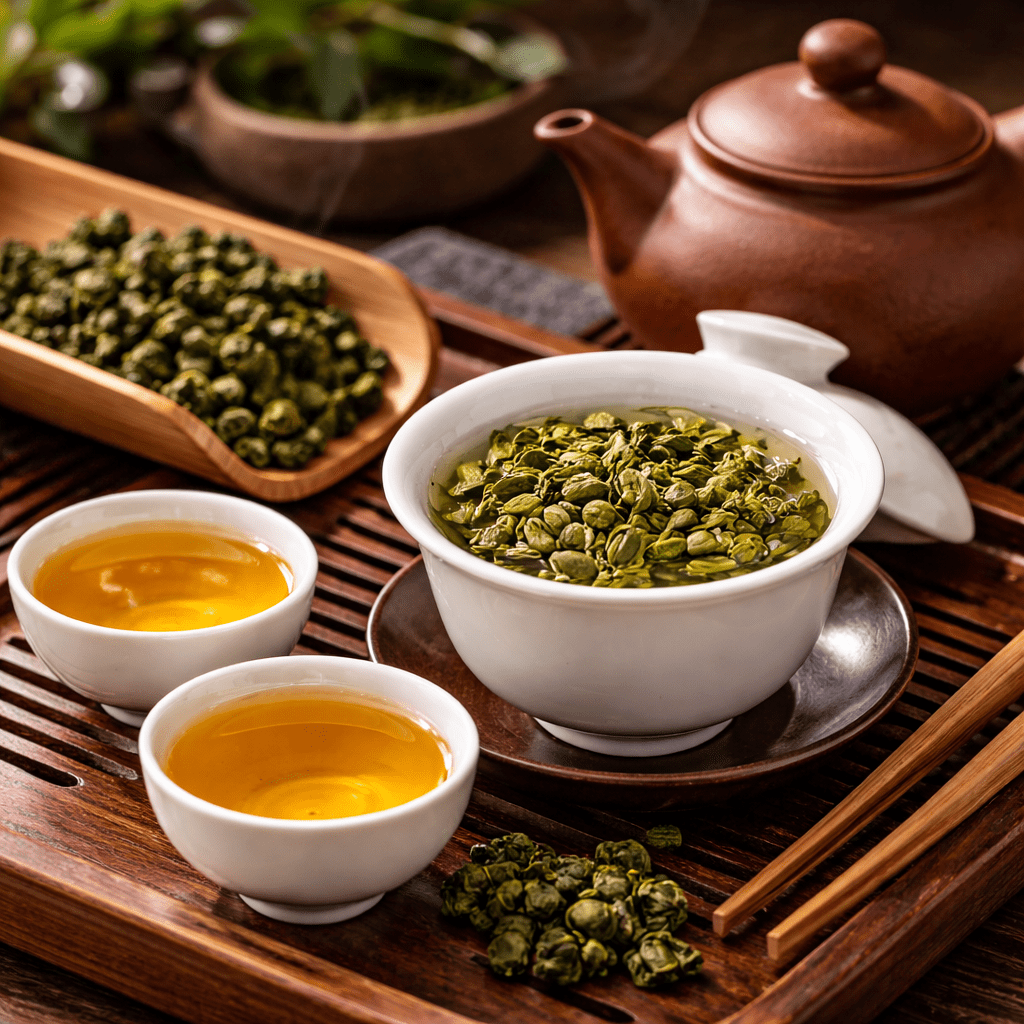
The liquor color usually ranges from pale golden to light amber, depending on oxidation level.
A well-made Tieguanyin should have:
- a lingering aftertaste
- a smooth mouthfeel
- a natural sweetness
- a floral fragrance that rises from the cup
Many tea drinkers describe the experience as fragrant and refreshing without bitterness.
How Tieguanyin Tea Is Made
The processing of Tieguanyin tea is highly complex and requires skilled craftsmanship.
The main steps include:
1 Harvesting
Tea leaves are picked when they reach the ideal maturity. Unlike green tea, oolong tea often uses slightly larger leaves.
2 Withering
Fresh leaves are spread out to reduce moisture content.
3 Tossing and Bruising
Leaves are gently shaken in bamboo baskets to bruise the edges. This activates enzymes responsible for oxidation.
4 Partial Oxidation
The leaves oxidize gradually, developing aroma and flavor.
5 Pan Firing
Heat stops the oxidation process.
6 Rolling
Leaves are rolled into tight, curled pellets.
7 Drying
The final drying stabilizes the tea for storage.
The result is the characteristic rolled oolong leaf shape that slowly unfurls during brewing.
How to Brew Tieguanyin Tea
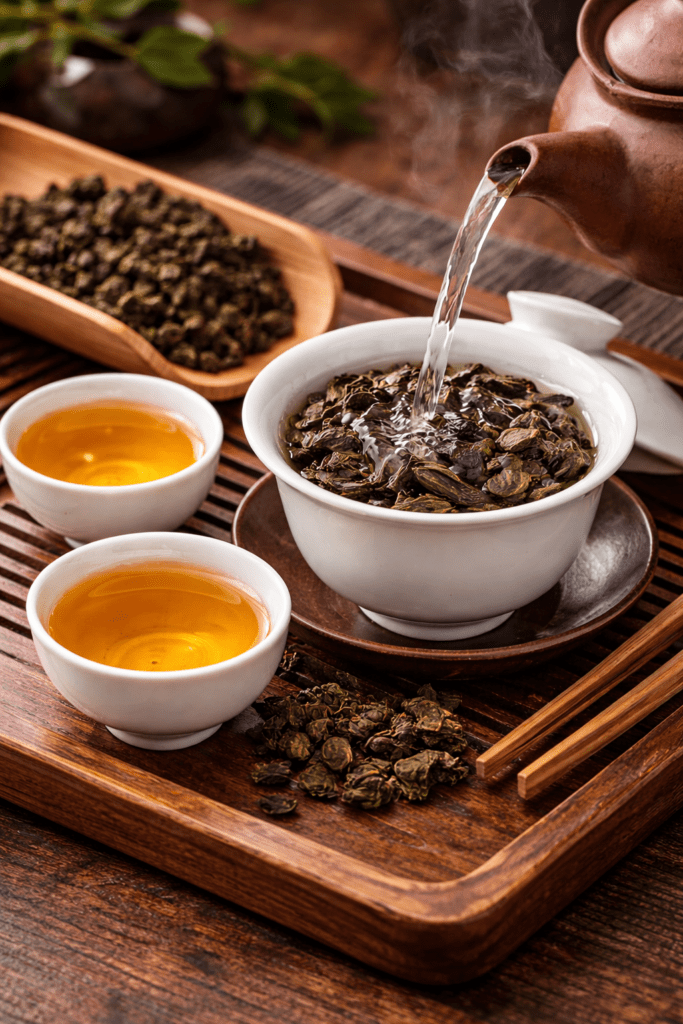
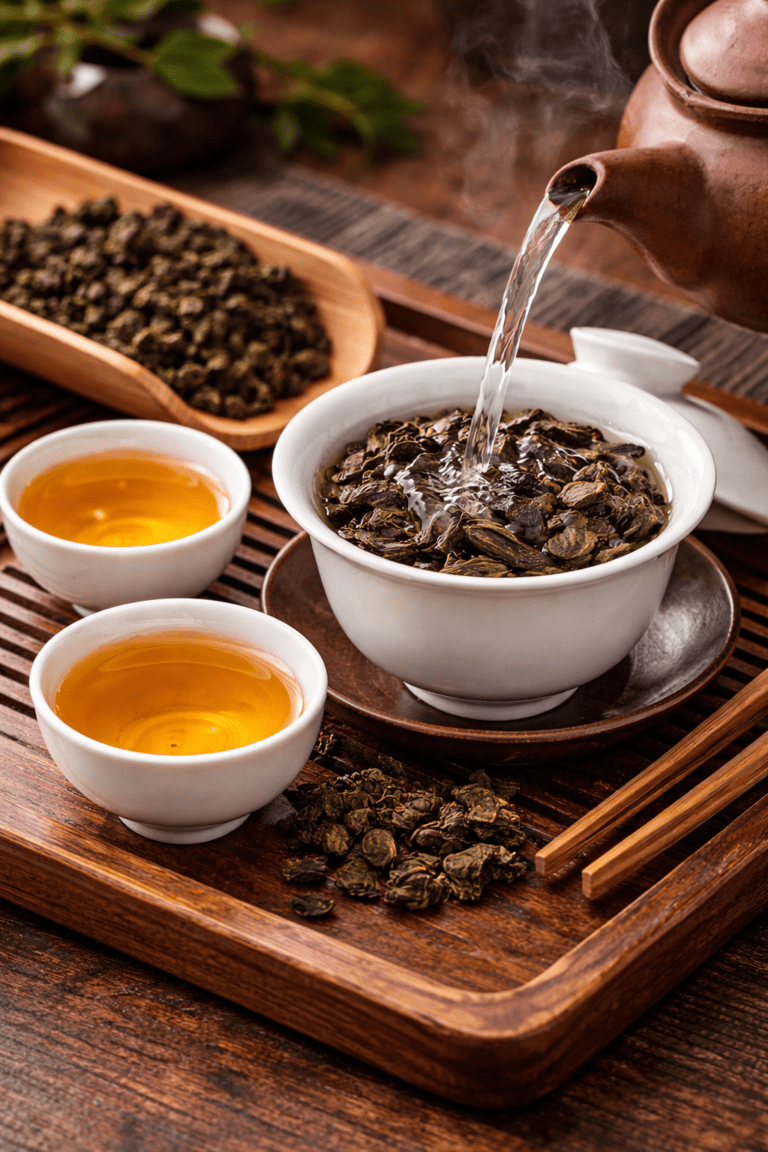
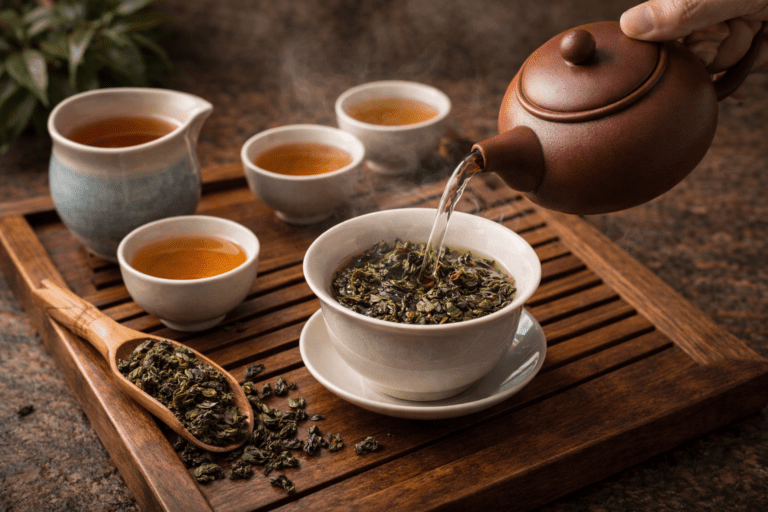
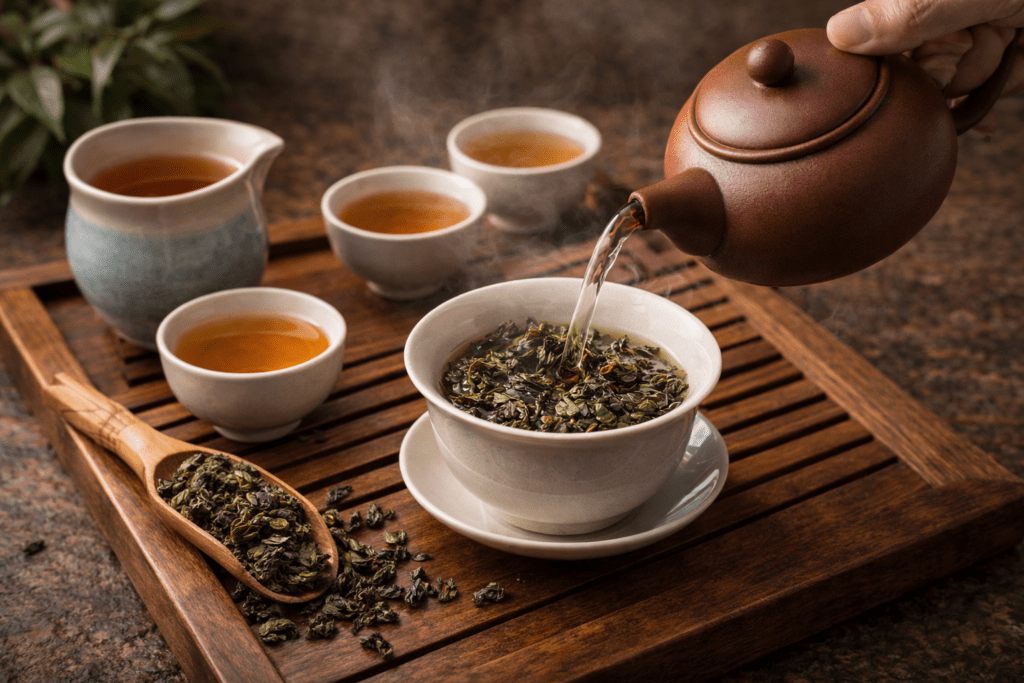
Tieguanyin tea is best brewed using traditional Chinese methods such as Gongfu brewing.
Water Temperature
90–95°C (194–203°F)
Tea Amount
5–7 grams per 100ml water
Steeping Time
First infusion: 10–20 seconds
Tieguanyin can be brewed multiple times, often producing 6–8 infusions with evolving flavor.
Brewing Methods
Common brewing tools include:
- gaiwan
- small clay teapot
- glass cup
How to Identify High-Quality Tieguanyin
When buying Tieguanyin tea, look for these signs of quality.
Appearance
Leaves should be tightly rolled and evenly shaped.
Aroma
High-quality Tieguanyin has a strong floral fragrance even before brewing.
Liquor
The tea liquor should be clear and bright.
Taste
Good Tieguanyin offers:
- smooth texture
- balanced sweetness
- long aftertaste
Avoid tea that tastes flat, sour, or overly bitter.
Health Benefits of Tieguanyin Tea
Like other oolong teas, Tieguanyin contains a range of beneficial compounds.
These include:
- polyphenols
- catechins
- antioxidants
- L-theanine
Studies suggest that oolong tea may help support:
- metabolism
- cardiovascular health
- mental focus
- digestion
Because it contains moderate caffeine, Tieguanyin can also provide gentle energy without the harsh stimulation associated with coffee.
Why Tieguanyin Remains One of China’s Most Famous Teas
Tieguanyin tea represents a perfect balance between tradition, craftsmanship, and flavor.
Its floral fragrance, smooth body, and complex brewing experience make it a favorite among tea enthusiasts worldwide.
Whether enjoyed casually or prepared using the Gongfu method, Tieguanyin tea offers a unique glimpse into the rich heritage of Chinese tea culture.
For anyone exploring Chinese tea for the first time, Tieguanyin is often considered one of the best starting points.