How to Use a Gaiwan: A Complete Beginner’s Guide to Chinese Tea Brewing
How to Use a Gaiwan
In traditional Chinese tea culture, few brewing tools are as iconic as the gaiwan. This simple yet elegant vessel has been used for centuries to brew tea in a way that highlights aroma, flavor, and the beauty of unfolding tea leaves.
At first glance, a gaiwan may look unfamiliar to beginners. Unlike a teapot or mug, it consists of three parts and requires a slightly different technique to use properly.
However, once you learn how to use a gaiwan, many tea enthusiasts find it becomes their favorite brewing tool. It allows precise control over steeping time, water temperature, and infusion strength, making it perfect for exploring the complexity of Chinese loose-leaf tea.
This guide will walk you through everything you need to know about using a gaiwan, including:
• what a gaiwan is
• why tea drinkers love it
• how to brew tea step by step
• common beginner mistakes
• tips for improving your brewing technique
What Is a Gaiwan
A gaiwan (盖碗) is a traditional Chinese tea brewing vessel consisting of three components:
• bowl
• lid
• saucer
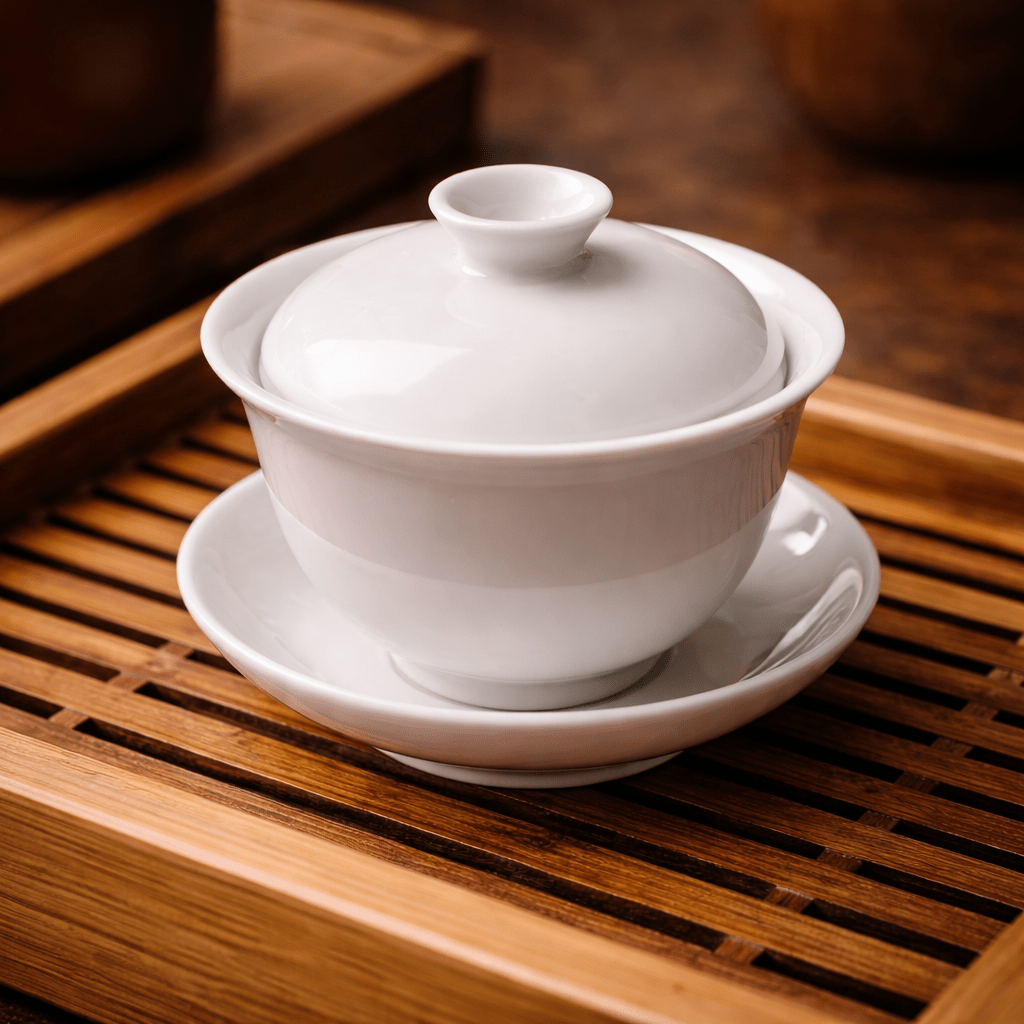
The bowl holds the tea leaves and water.
The lid is used to control pouring and aroma.
The saucer protects the hands from heat.
Gaiwans are usually made from:
• porcelain
• glass
• ceramic
Porcelain gaiwans are the most common because they do not absorb flavor and work well with many types of tea.
Why Use a Gaiwan Instead of a Teapot
Many tea drinkers prefer using a gaiwan instead of a teapot for several reasons.
Better control
Because the lid can be lifted slightly during pouring, you can easily control how long the tea steeps.
Aroma appreciation
The lid traps tea aroma. After brewing, lifting the lid allows you to smell the fragrance of the tea leaves.
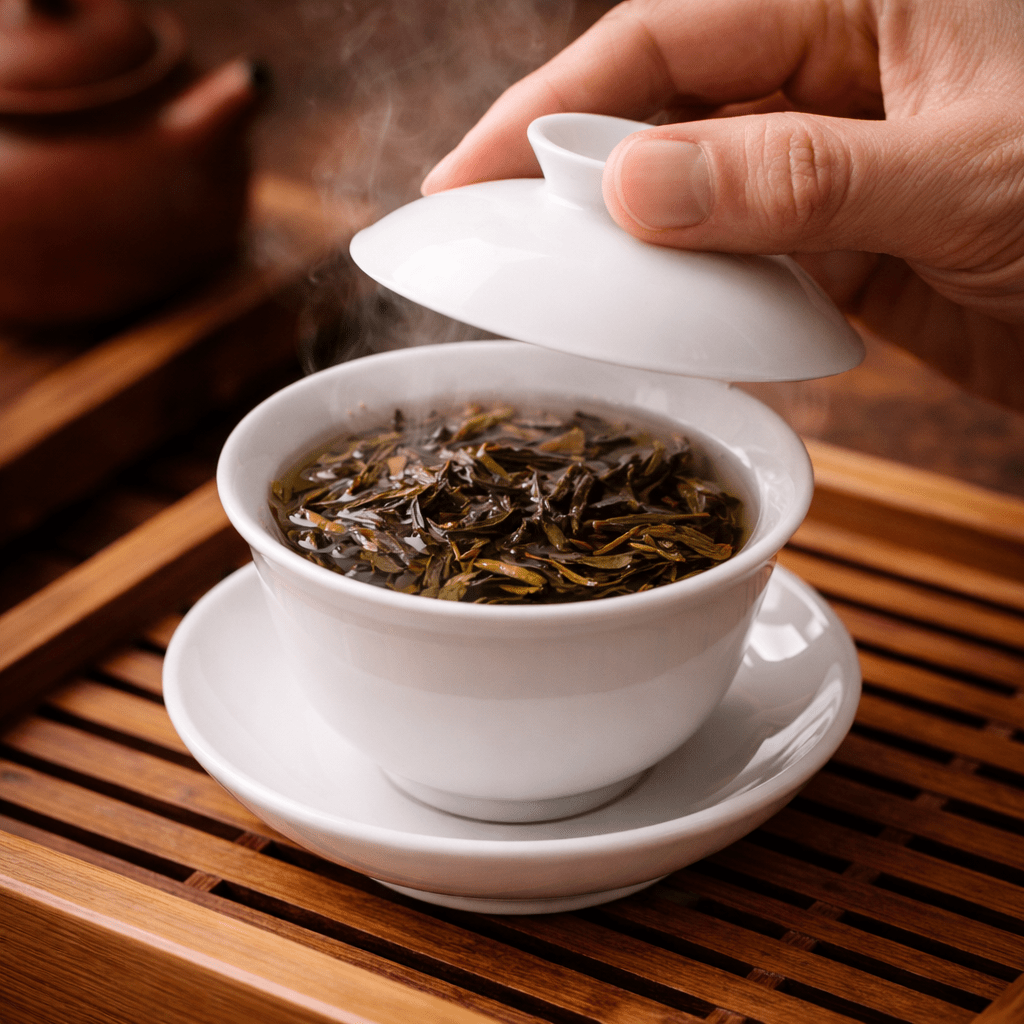
Visual experience
Gaiwans allow you to observe tea leaves as they expand and release flavor.
Versatility
A gaiwan can be used for nearly all types of tea:
• green tea
• white tea
• oolong tea
• black tea
• pu-erh tea
This makes it one of the most flexible tools in Chinese tea brewing.
Teas That Work Best with a Gaiwan
While a gaiwan can brew almost any tea, some teas work particularly well with it.
Green Tea
Delicate green teas benefit from careful control of steeping time and temperature.
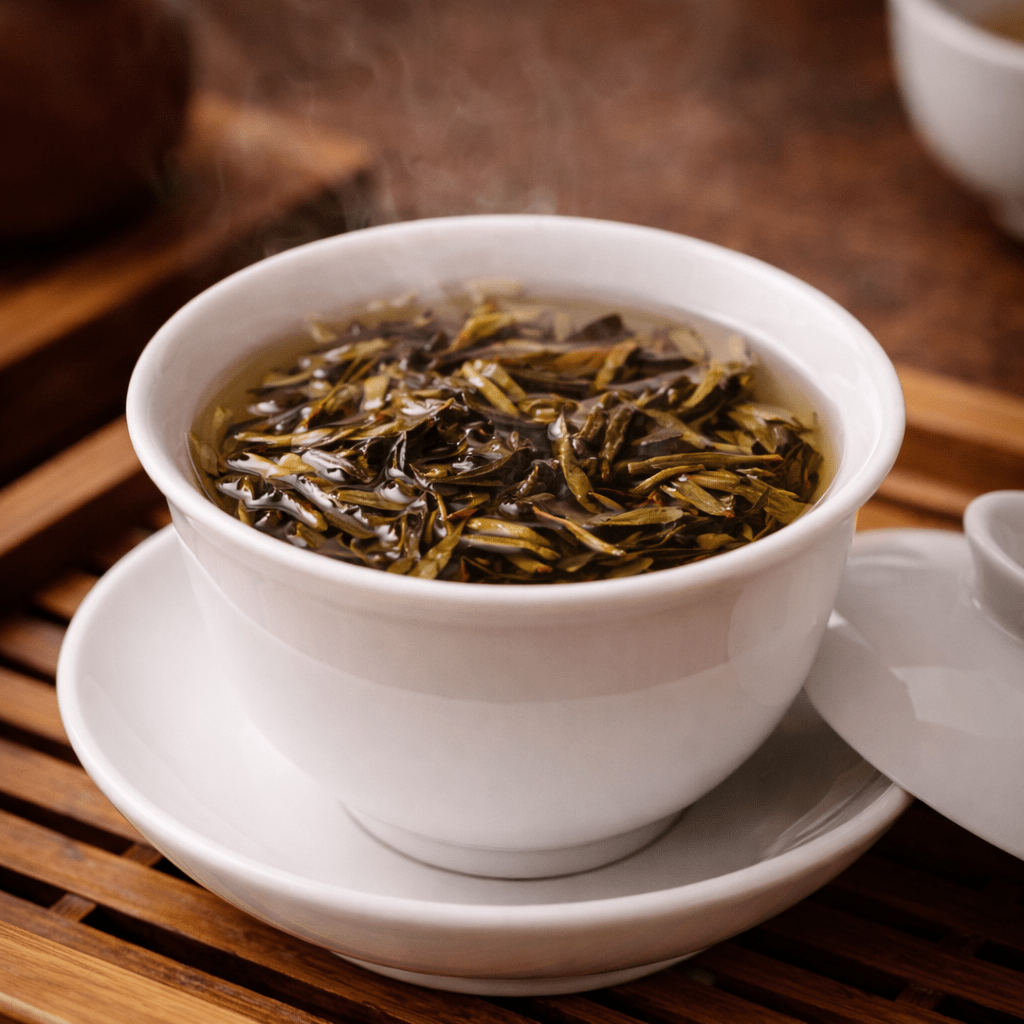
White Tea
White tea buds expand beautifully inside a gaiwan.
Oolong Tea
Oolong tea is traditionally brewed using a gaiwan during Gongfu tea brewing.
Pu-erh Tea
Both raw and ripe pu-erh teas can be brewed effectively in a gaiwan.
How to Brew Tea Using a Gaiwan (Step-by-Step Guide)
Brewing tea in a gaiwan is simple once you learn the basic process.
Step 1 Warm the Gaiwan
Before adding tea leaves, rinse the gaiwan with hot water.
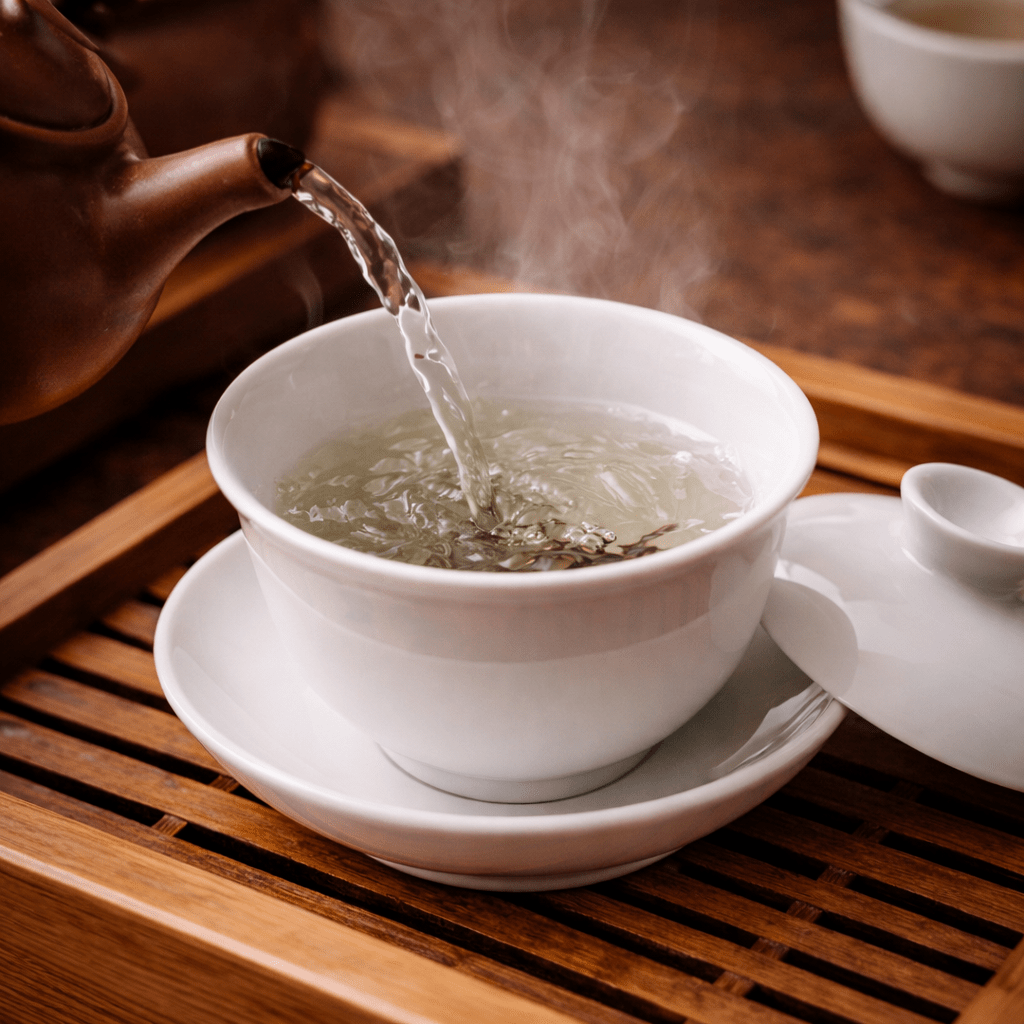
This serves two purposes:
• warming the vessel
• removing any dust
Warm teaware helps maintain stable brewing temperatures.
Step 2 Add Tea Leaves
Place the tea leaves inside the gaiwan.
Typical leaf amount:
3–5 gramsFor Gongfu brewing, the ratio is often higher.
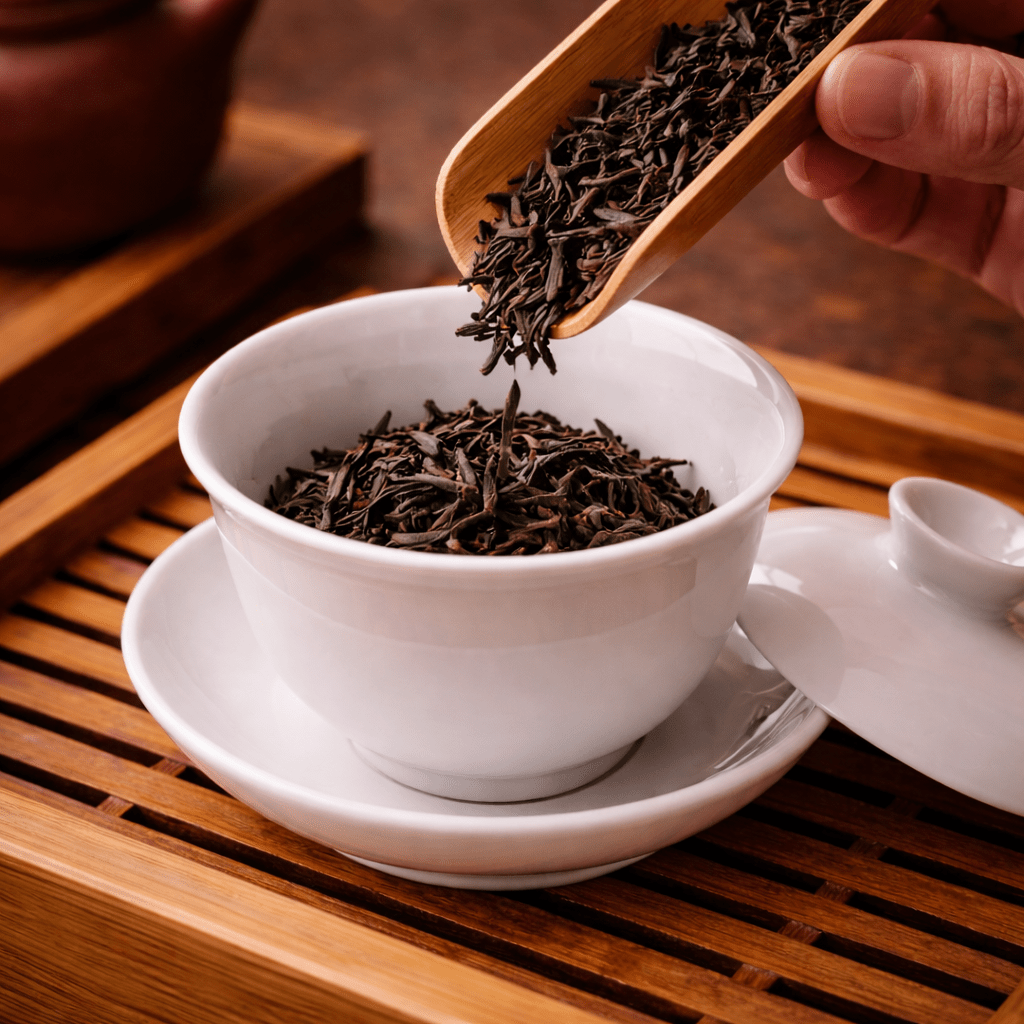
Different teas require slightly different amounts, but using enough leaves is essential for rich flavor.
Step 3 Pour Hot Water
Slowly pour hot water into the gaiwan.
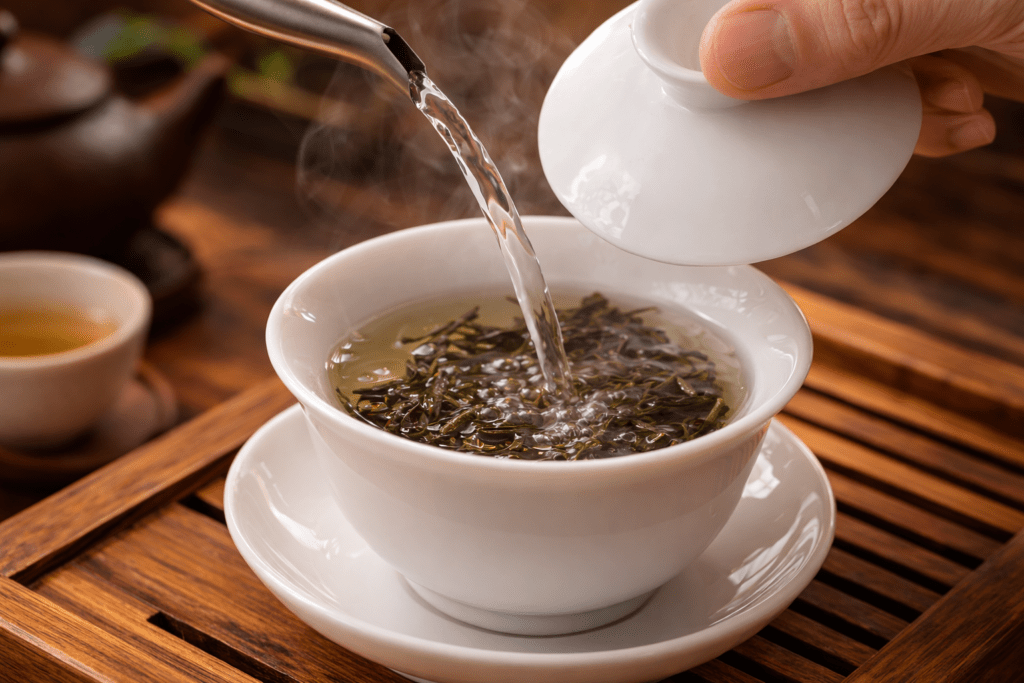
Water temperature depends on the tea type:
Green tea
75–85°CWhite tea
80–90°COolong tea
90–95°CPu-erh tea
95–100°CStep 4 Close the Lid
After pouring water, place the lid on the gaiwan.
Leave a small gap between the lid and bowl while pouring later.
This gap allows tea to flow while holding the leaves inside.
Step 5 Steep the Tea
Typical steeping time:
First infusion
10–20 secondsLater infusions
increase graduallyBecause gaiwan brewing uses many infusions, each steep is relatively short.
Step 6 Pour the Tea
Tilt the gaiwan slightly and pour the tea into a fairness pitcher or directly into cups.
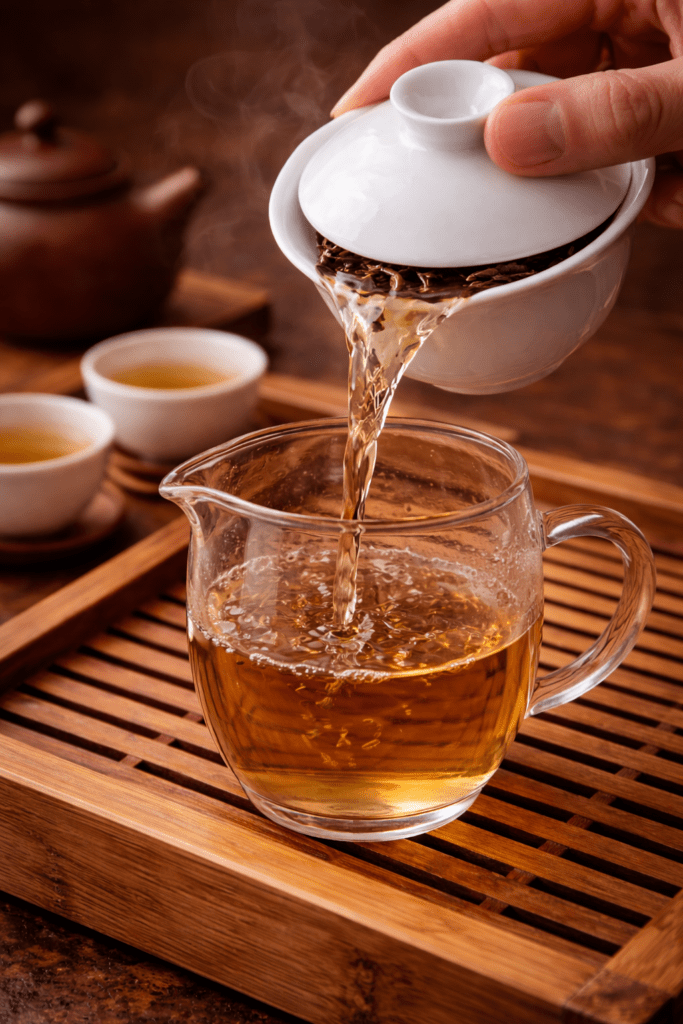
Hold the lid gently with your fingers to prevent leaves from escaping.
With practice, this pouring motion becomes very natural.
Step 7 Enjoy Multiple Infusions
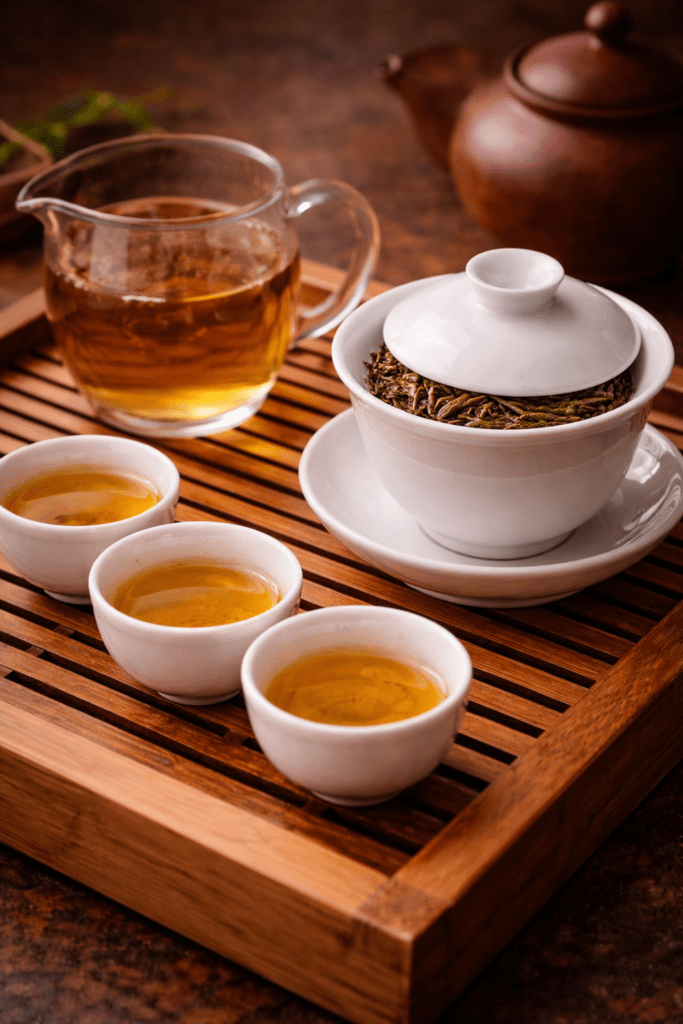
One of the advantages of gaiwan brewing is that tea can be steeped multiple times.
Many teas produce:
5–10 infusionsEach infusion reveals slightly different flavors and aromas.
Common Beginner Mistakes When Using a Gaiwan
Many beginners make similar mistakes when first using a gaiwan.
Using too little tea
This leads to weak flavor.
Steeping for too long
Over-steeping can make tea bitter.
Pouring too slowly
Tea continues steeping while pouring, which can over-extract flavor.
Water too hot for green tea
This can damage delicate tea leaves.
Learning to adjust these factors helps improve tea quality quickly.
Tips for Mastering Gaiwan Brewing
If you want to improve your tea brewing skills, keep these tips in mind.
Practice holding the gaiwan
At first, it may feel awkward. Over time it becomes very comfortable.
Experiment with infusion time
Small changes can dramatically affect flavor.
Observe the leaves
Watching tea leaves expand teaches you how tea behaves during brewing.
Focus on aroma
Smelling the lid after steeping reveals subtle fragrance notes.
Why Many Tea Experts Prefer Gaiwan Brewing
For experienced tea drinkers, gaiwan brewing offers unmatched flexibility.
It allows precise adjustments to:
• water temperature
• steeping time
• tea leaf ratio
• infusion count
Because the vessel is neutral and simple, it reveals the true character of the tea.
Many tea professionals even use gaiwans when evaluating high-quality tea.
Final Thoughts
Learning how to use a gaiwan opens the door to a deeper understanding of Chinese tea culture.
Although it may look unfamiliar at first, the gaiwan is actually one of the most intuitive and versatile brewing tools available.
With just a little practice, you will find that gaiwan brewing provides:
• better flavor control
• a more engaging tea experience
• a deeper connection with traditional tea culture
For anyone interested in exploring loose-leaf Chinese tea, mastering the gaiwan is an essential step.
Continue the Journey
Tea Infuser Guide: How to Choose the Best Infuser for Loose Leaf Tea
Loose leaf tea has become increasingly popular among tea drinkers around the...
Tea Tray Guide: What Is a Gongfu Tea Tray and How to Choose the Right One
In traditional Chinese tea culture, the tools used to prepare tea are...
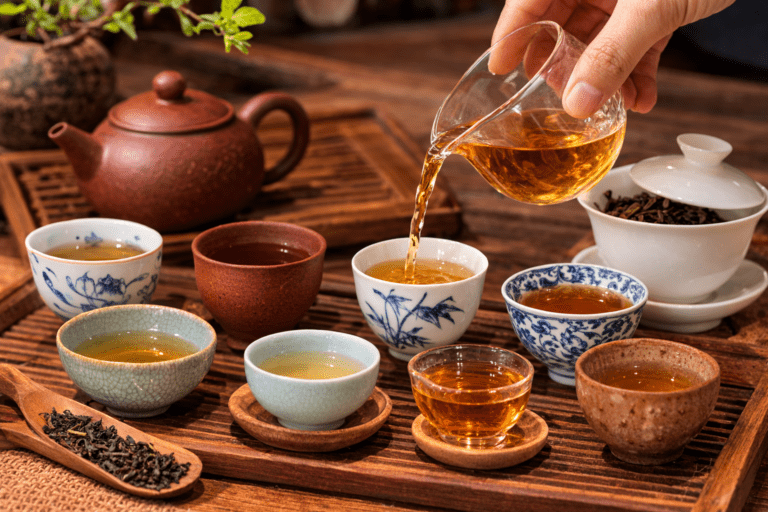
Chinese Tea Cups Guide: Understanding Traditional Cups for Gongfu Tea
Tea cups are one of the most important elements of traditional Chinese...