Types of Chinese Tea: The Complete Guide to the Six Tea Categories
Chinese tea is one of the oldest tea traditions in the world. For thousands of years, tea has been deeply connected with Chinese culture, philosophy, and everyday life. In China, tea is not only a drink but also a symbol of harmony, mindfulness, and respect for nature.
Many people assume that different teas come from different plants. In reality, most traditional Chinese teas come from the same plant, known as Camellia sinensis. What makes each tea unique is the way it is processed after the leaves are harvested.
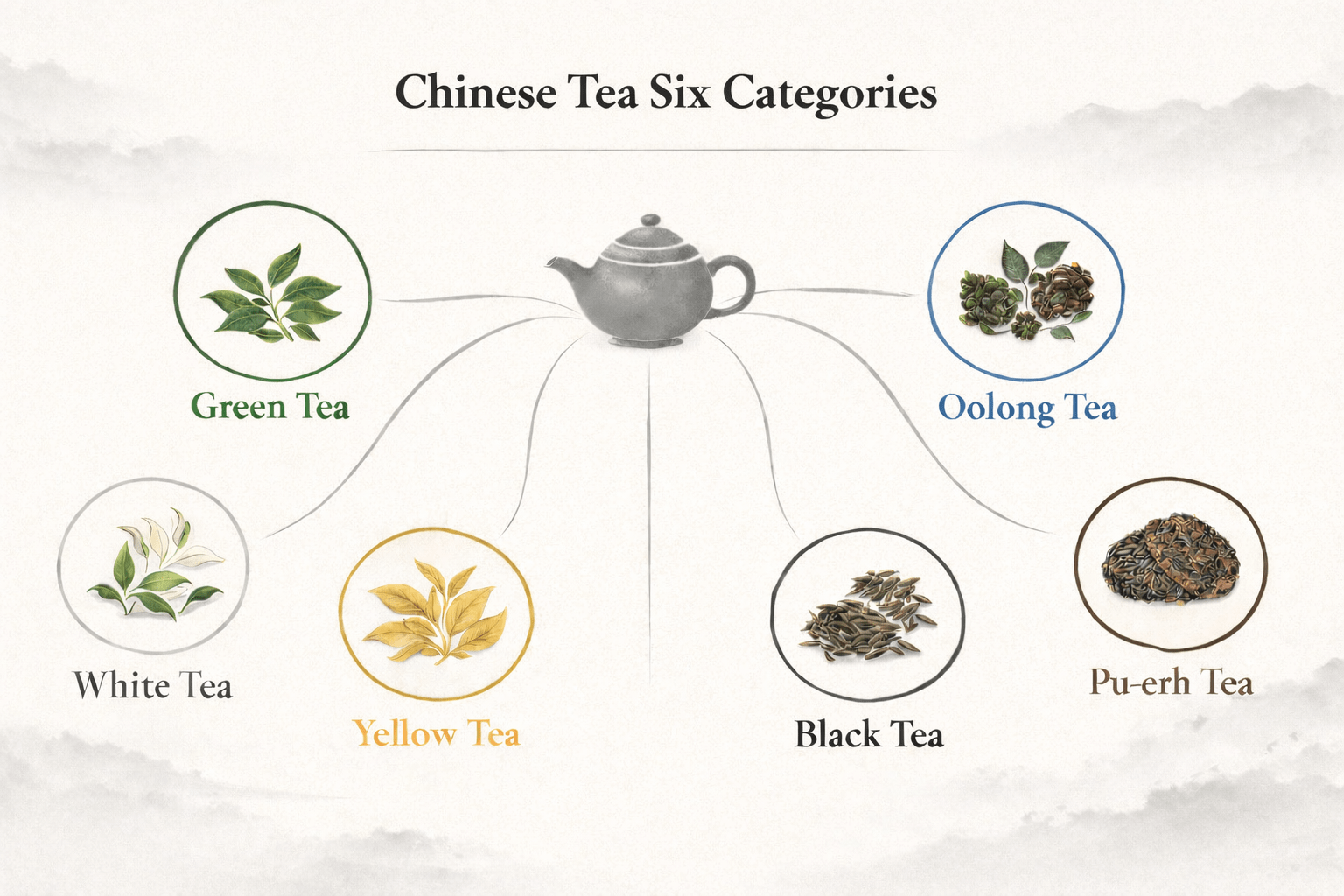
Chinese tea is traditionally divided into six main categories. Each category represents a different method of processing and oxidation, which leads to very different aromas, flavors, and appearances.
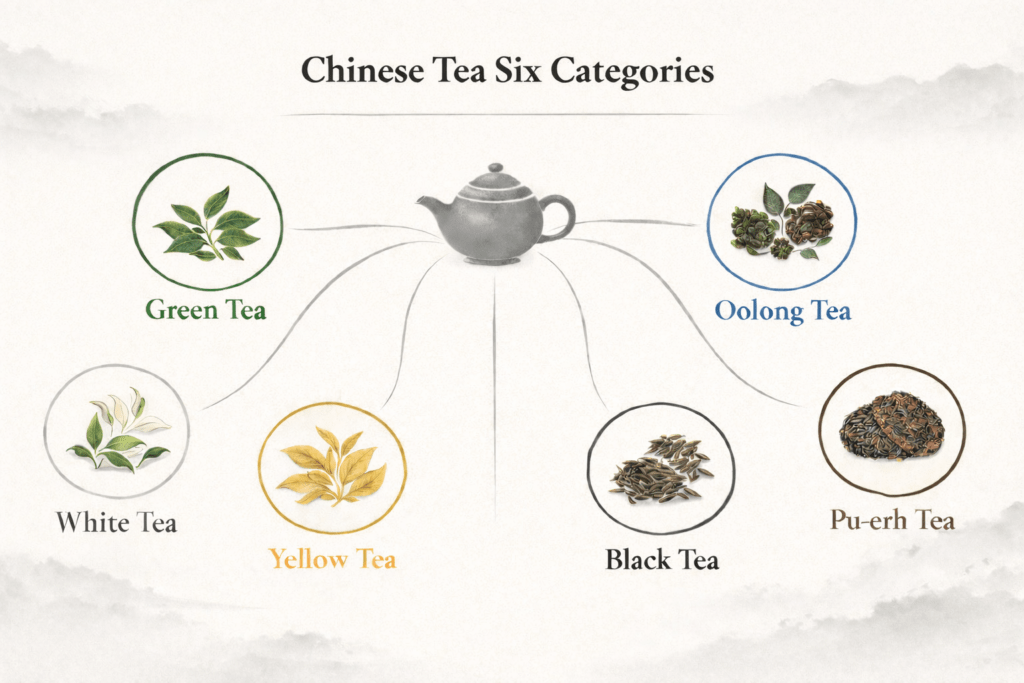
These six major types of Chinese tea are green tea, white tea, yellow tea, oolong tea, black tea, and pu-erh tea. Each type reflects a different level of oxidation and craftsmanship.
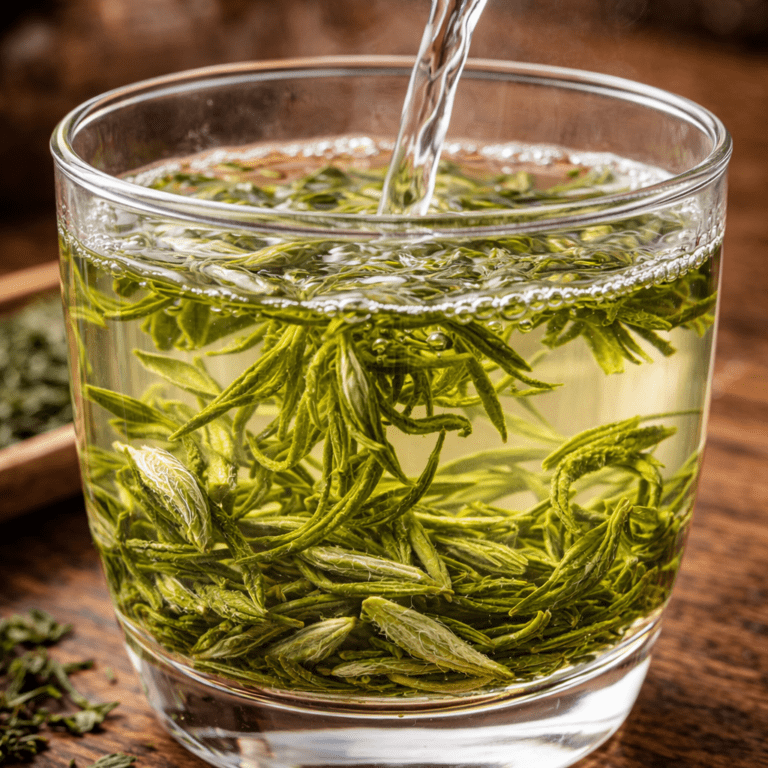
Green tea is the least processed type of tea. After harvesting, the tea leaves are quickly heated to stop oxidation. This process preserves the fresh green color of the leaves and creates a light, refreshing flavor. Because of this minimal processing, green tea is often described as grassy, clean, and delicate.
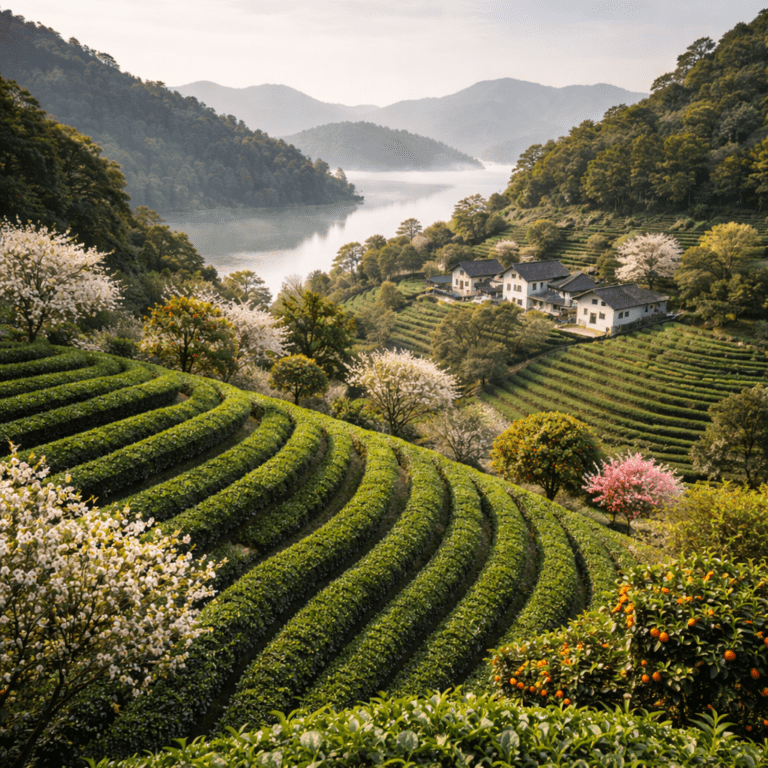
Some of the most famous Chinese green teas include Longjing (Dragon Well tea), Biluochun, and Huangshan Maofeng. These teas are appreciated for their elegant aroma and smooth taste.
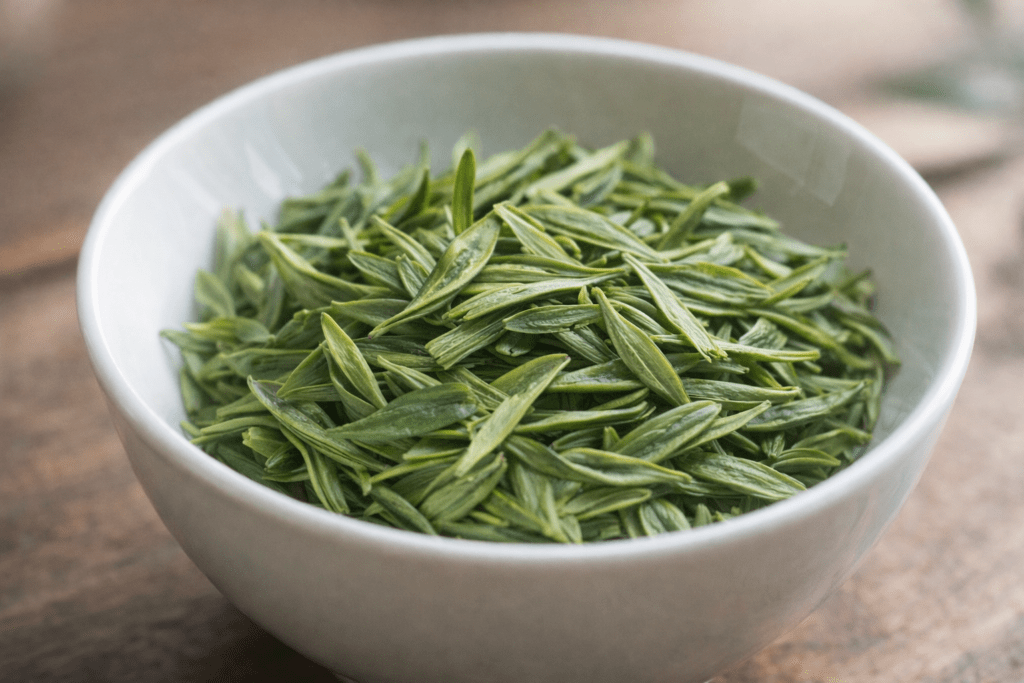
White tea is one of the most natural forms of tea. It is made from young buds and leaves that are simply withered and dried with minimal processing. This gentle treatment allows white tea to retain its natural sweetness and subtle floral fragrance.
Two of the most well-known white teas are Baihao Yinzhen, also known as Silver Needle, and Bai Mudan, or White Peony. White tea is often considered one of the most refined and elegant teas in Chinese tea culture.
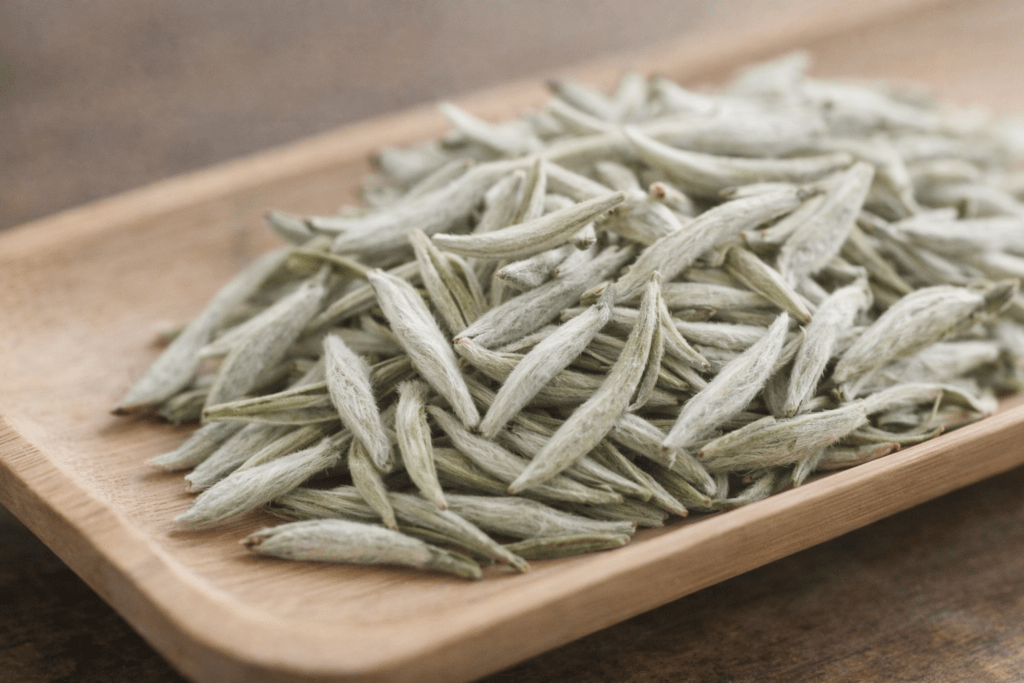
Yellow tea is one of the rarest types of Chinese tea. Its production involves a special step known as “sealed yellowing,” in which the tea leaves are lightly fermented in a warm and humid environment. This process softens the grassy taste that can sometimes appear in green tea and produces a smoother, mellow flavor.
Because of its complex processing and limited production, yellow tea is rarely found outside China. Famous examples include Junshan Yinzhen and Mengding Huangya.
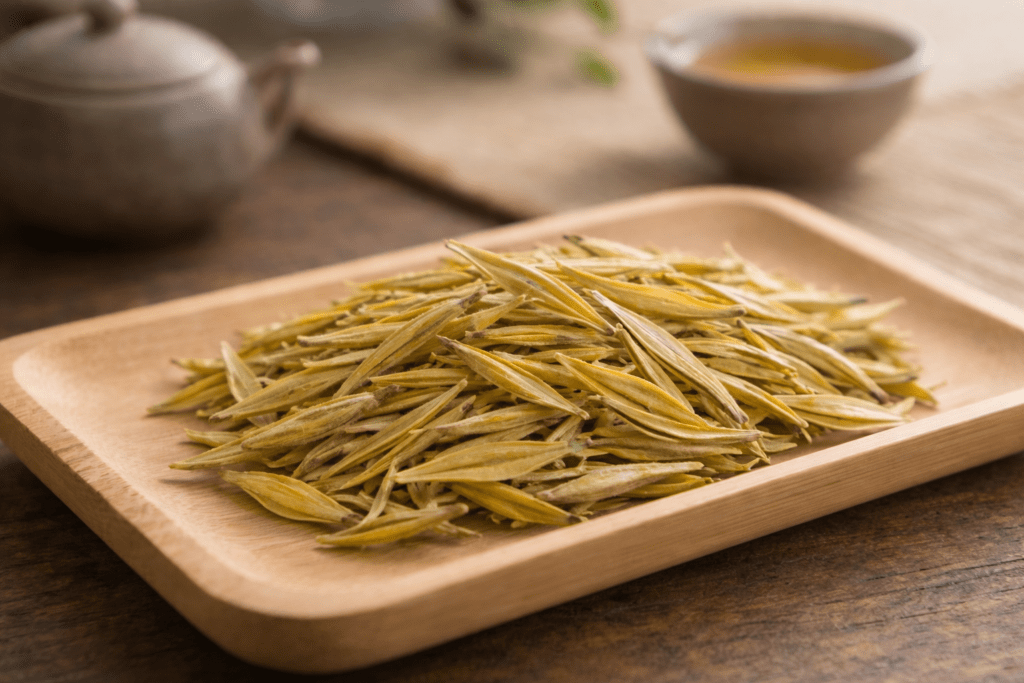
Oolong tea represents the art of balance in Chinese tea making. It is partially oxidized, which means it sits between green tea and black tea in terms of processing.
This partial oxidation allows oolong tea to develop an extraordinary range of flavors. Some oolong teas are light and floral, while others are roasted and rich.
Famous oolong teas include Tieguanyin, Da Hong Pao, and Phoenix Dancong. Oolong tea is also closely associated with the traditional Chinese brewing method known as Gongfu tea.
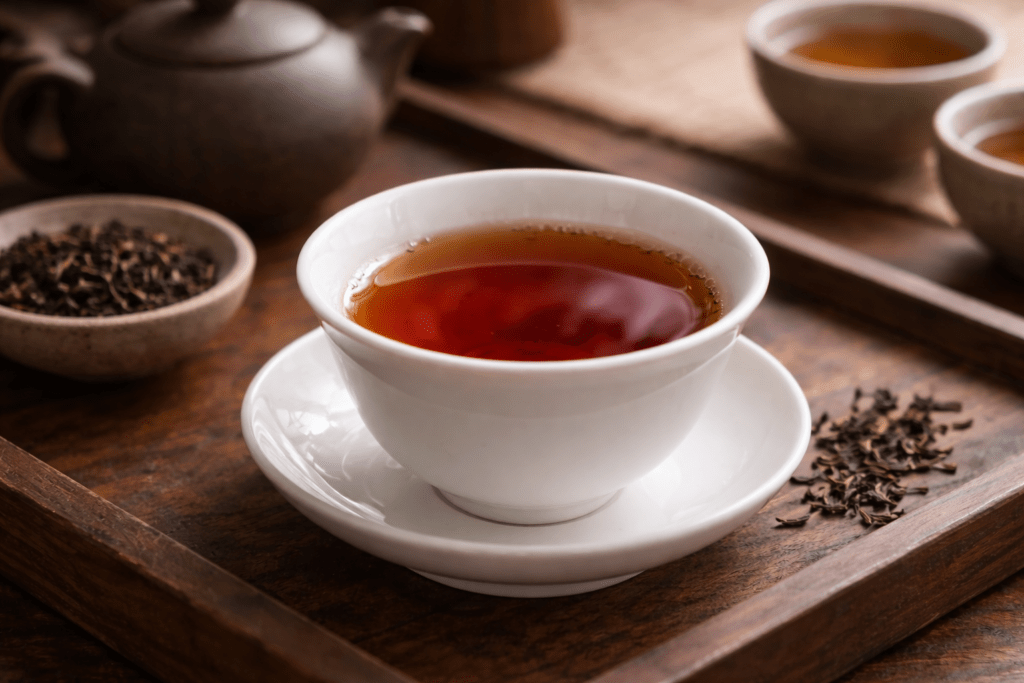
Black tea in China is traditionally called “Hong Cha,” which means red tea. This name comes from the reddish color of the tea liquor after brewing.
Black tea undergoes full oxidation, giving it a stronger flavor and deeper aroma compared to lighter teas. Famous Chinese black teas include Keemun, Dianhong, and Lapsang Souchong.
These teas are known for their rich fragrance, smooth body, and slightly sweet finish.
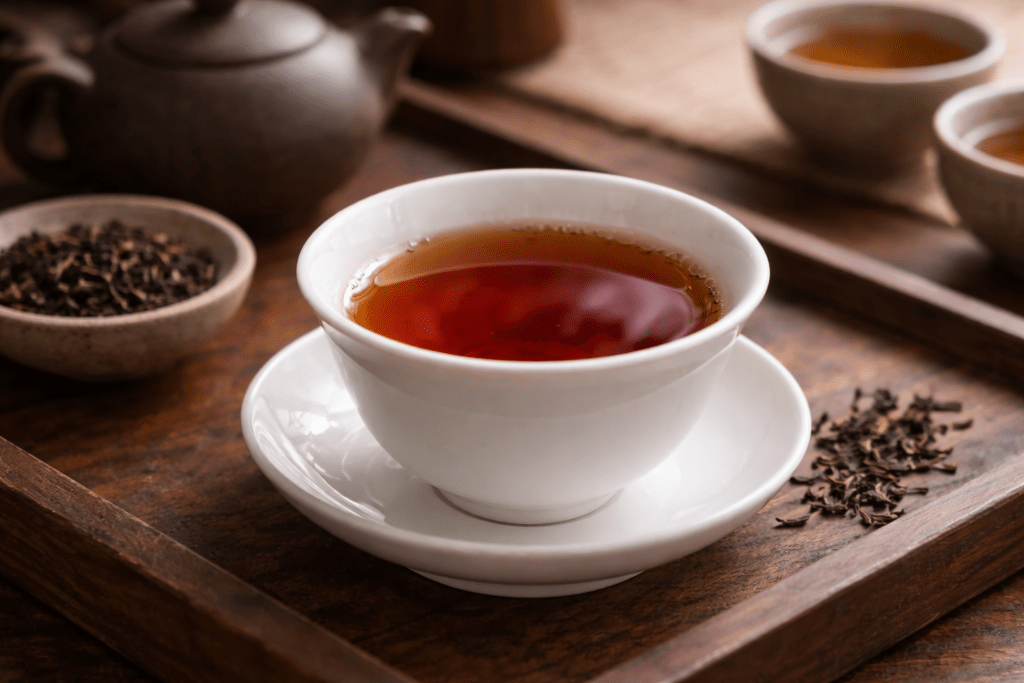
Pu-erh tea is unique among Chinese teas because it undergoes a process of post-fermentation. Over time, pu-erh tea can continue to age, much like wine. As it matures, its flavor becomes deeper, smoother, and more complex.
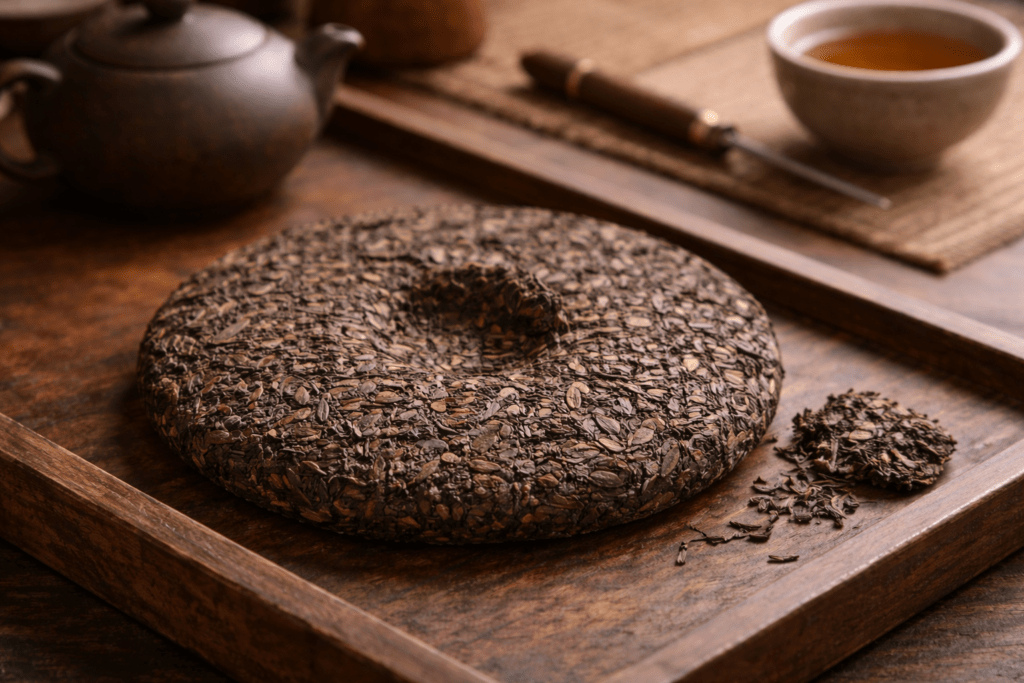
Pu-erh tea is traditionally produced in Yunnan province and often compressed into round tea cakes for aging and storage. There are two main types of pu-erh tea: raw pu-erh and ripe pu-erh.
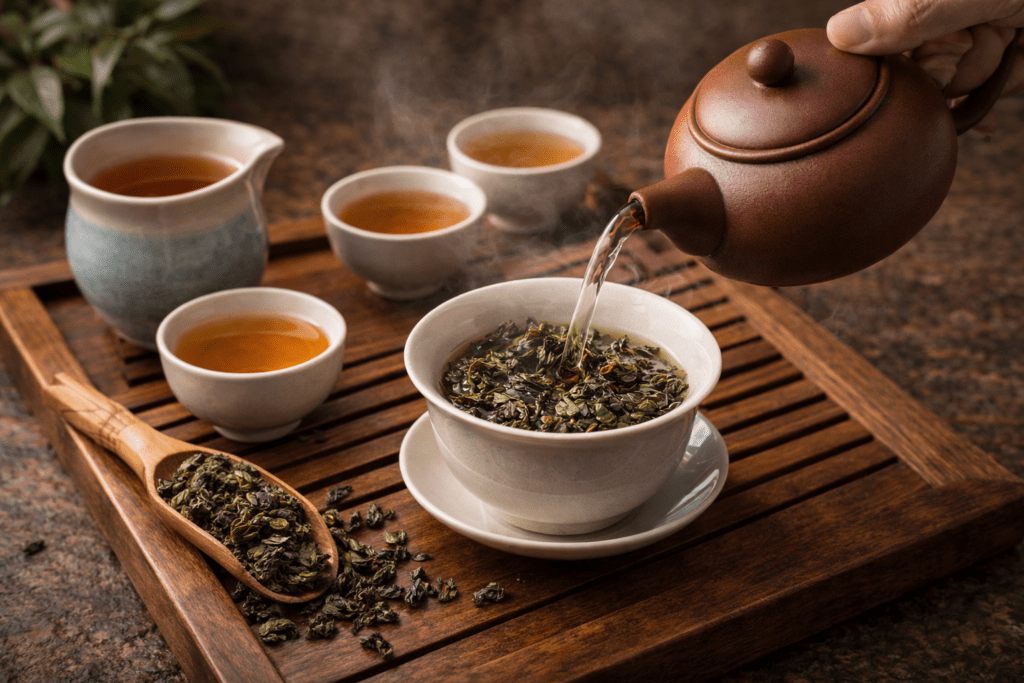
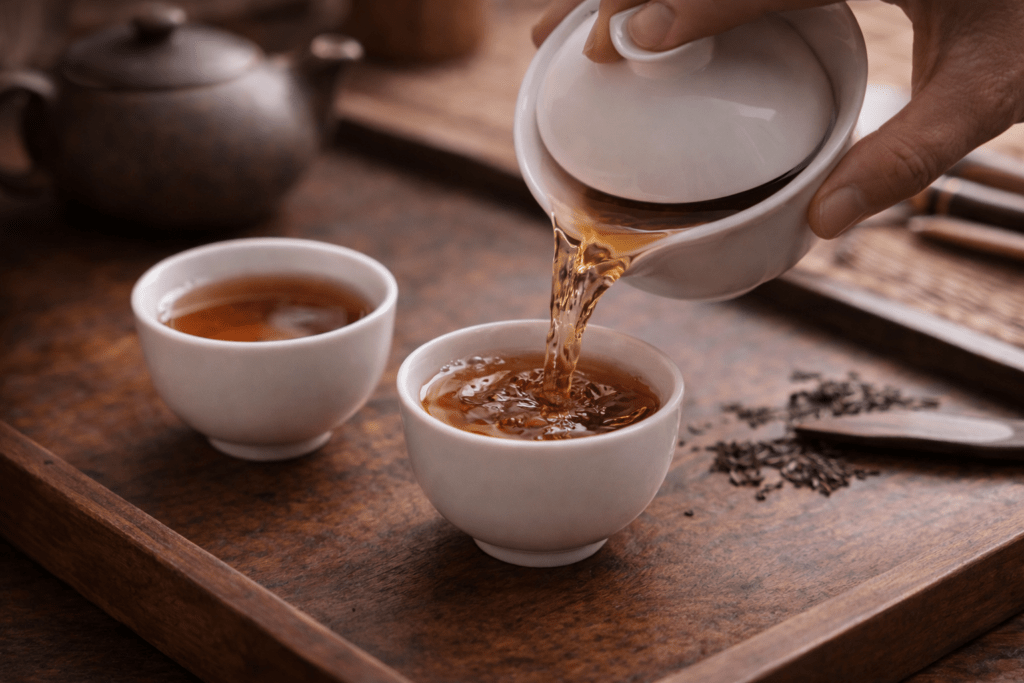
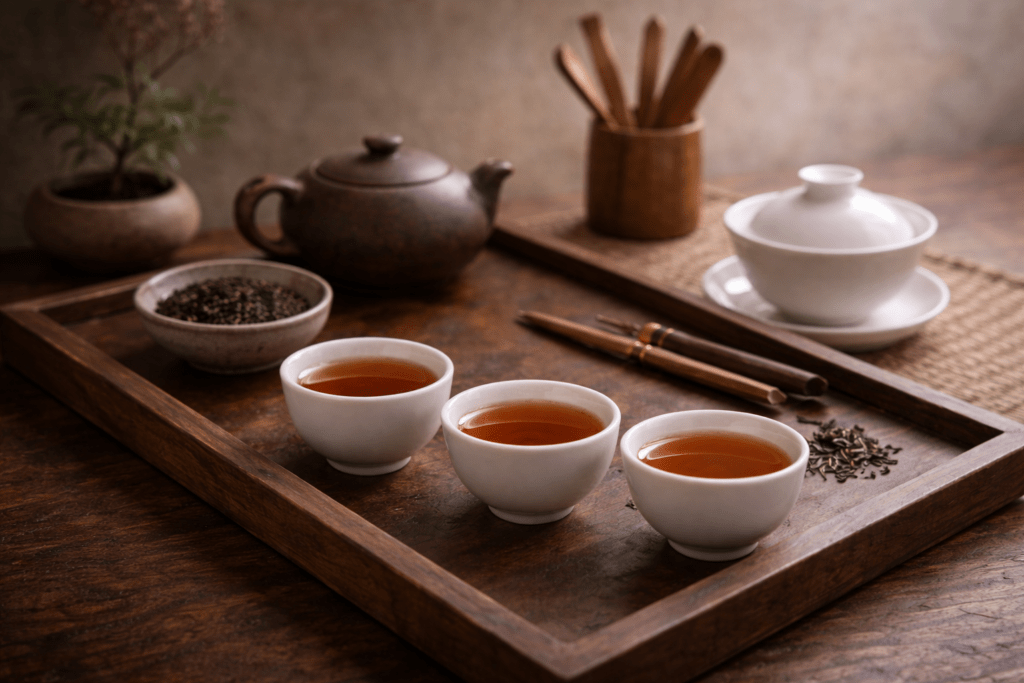
In traditional Chinese culture, tea is often brewed using the Gongfu tea method. This technique uses a small teapot or gaiwan, a high ratio of tea leaves, and multiple short infusions.
Each infusion reveals a slightly different layer of flavor, allowing tea drinkers to fully appreciate the complexity of the tea.
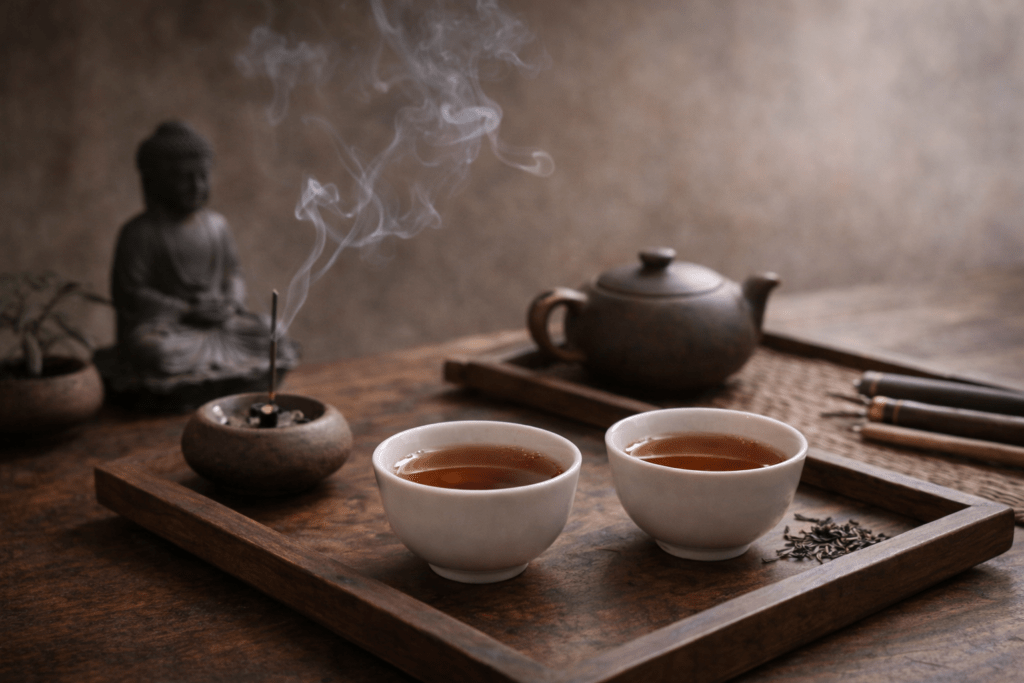
Beyond taste, tea in China also represents a philosophy of life. Tea drinking encourages calmness, attention, and connection with nature. For many people, preparing and drinking tea becomes a quiet ritual that brings a sense of inner stillness.
Understanding the six types of Chinese tea is the first step toward exploring the depth of Chinese tea culture. Each type reflects centuries of craftsmanship and a unique approach to nature, flavor, and balance.
Whether someone prefers the freshness of green tea, the elegance of white tea, the complexity of oolong tea, or the deep richness of pu-erh tea, Chinese tea offers a world of discovery in every cup.
Continue the Journey
Huangshan Maofeng Tea Guide: Flavor, History, and Brewing
Introduction Among the many famous Chinese green teas, Huangshan Maofeng tea stands...
Biluochun Tea Guide: Flavor, History, and Brewing
Introduction Chinese green tea is famous around the world for its delicate...

Longjing Tea Explained: China’s Famous Dragon Well Tea
Introduction Longjing tea, also known as Dragon Well tea, is one of...