Zen looks simple.
Too simple.
So simple that most people miss it.
They think:
👉 “There must be more”
But Zen is built on something radical:
👉 There is not more
There is less.
Much less.
And in that “less”…
👉 everything becomes clear

Principle 1: Direct Experience Over Ideas
Zen begins here.
👉 Reality is not what you think
👉 It is what you experience
Most people live in:
- thoughts
- interpretations
- labels
- judgments
You don’t see reality.
You see:
👉 your idea of reality
Example:
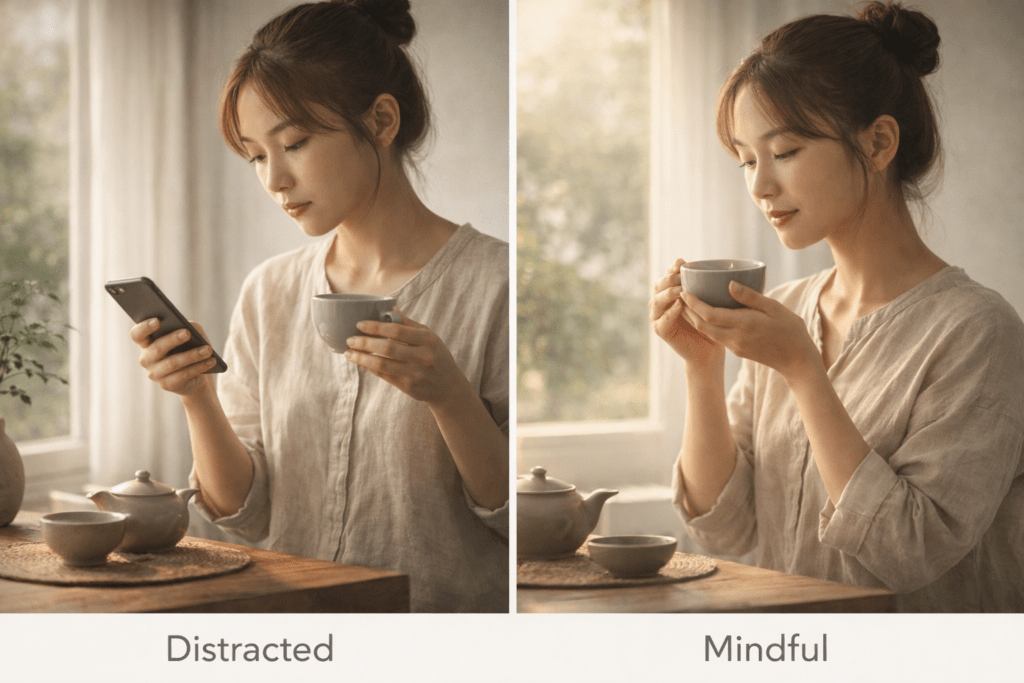
You drink tea.
But instead of tasting it…
You think:
- “Is this good tea?”
- “What type is this?”
- “I’ve had better”
You are not experiencing.
You are thinking.
Zen cuts this.
It points you back to:
👉 raw experience

Principle 2: The Present Moment Is Everything
Zen does not care about:
- past
- future
Only:
👉 now
Not as philosophy.
As fact.
Because:
- the past is memory
- the future is imagination
Only this moment is real.
But the mind resists this.
It constantly escapes:
👉 into past or future
Zen brings it back.
Again and again.
To:
👉 this breath
👉 this step
👉 this moment
Principle 3: No Fixed Self
This one is deeper.
Zen says:
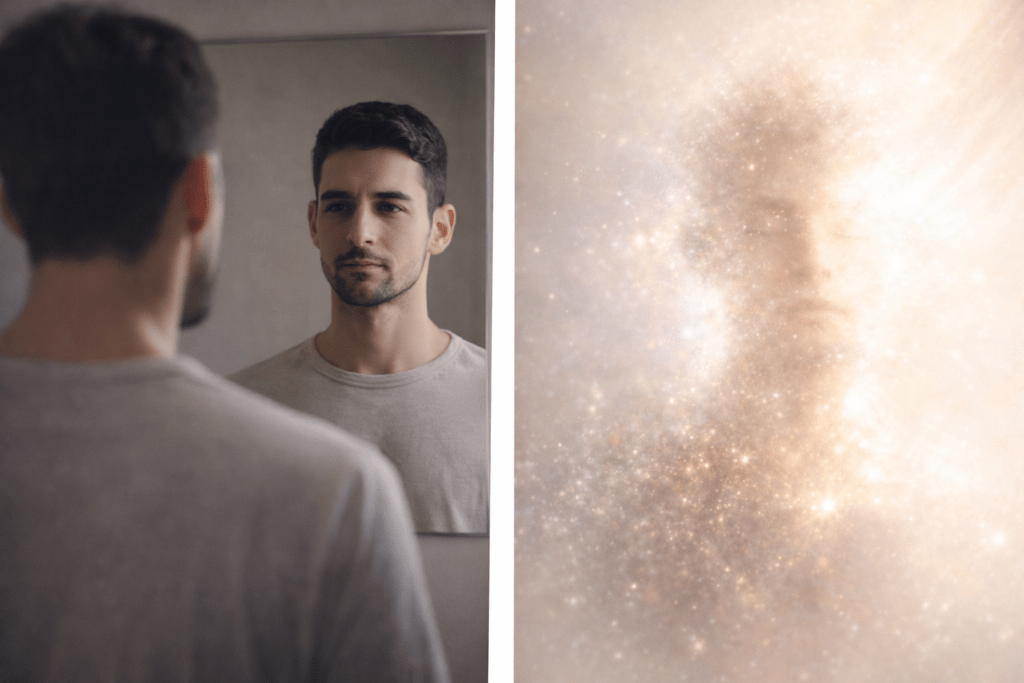
👉 the “self” you think you are… is not fixed
It changes constantly:
- thoughts change
- emotions change
- identity changes
So what are you?
Zen doesn’t answer.
It lets you see.
When you stop clinging to identity…
👉 suffering decreases
Because there is no rigid “you” to defend.
Principle 4: Letting Go, Not Controlling
Most people live like this:
👉 control everything
- outcomes
- emotions
- people
- situations
Zen shows:
👉 control creates tension
The tighter you hold…
The more you suffer.
Letting go is not:
❌ giving up
❌ being passive
It is:
👉 not forcing reality
Like water:
- it flows
- it adapts
- it doesn’t resist unnecessarily
Zen is like that.
Principle 5: Simplicity Reveals Truth
Zen removes the unnecessary.
Not because simplicity is “nice”…
But because:
👉 complexity hides reality
Your life is not complicated.
Your thinking is.
Zen simplifies:
- actions
- thoughts
- environment
And suddenly:
👉 clarity appears

Principle 6: Silence Is Not Empty
Most people fear silence.
Because silence reveals:
👉 what’s inside
So they fill life with:
- noise
- content
- distraction
Zen does the opposite.
It creates silence.
And in that silence…
👉 you begin to see clearly
Silence is not absence.
It is:
👉 presence without distraction
Principle 7: Practice Is the Path
Zen is not theory.
You cannot:
👉 think your way into Zen
You must:
👉 practice
Simple things:
- sitting
- breathing
- walking
- drinking tea
But done with:
👉 full awareness
That is Zen.
Not special.
But completely different.

Principle 8: Nothing to Achieve
This is the hardest one.
Zen says:
👉 there is no final goal
No enlightenment to chase.
No perfect state to reach.
Because:
👉 chasing creates distance
You think:
“I will become complete”
Zen shows:
👉 you are already complete
You just don’t see it.
Why These Principles Feel Difficult
Because they go against everything you learned.
You were taught:
- improve yourself
- gain knowledge
- control life
- achieve goals
Zen says:
👉 stop
And that feels uncomfortable.
Because:
👉 your identity is built on “doing”
Zen introduces:
👉 being
How These Principles Change Your Life
Not dramatically.
Not instantly.
But deeply.
You begin to:
- react less
- notice more
- simplify naturally
- feel less internal tension
Life doesn’t change.
👉 your relationship to life changes
And that changes everything.
Final Insight
Zen is not something you add to life.
It is something you remove.
Remove:
- noise
- excess thinking
- unnecessary control
And what remains is:
👉 clarity
👉 calm
👉 presence
Not created.
Already there.