Why Kaishu Is Where Everything Begins
If you ask any serious calligrapher where to start—
the answer is almost always the same:
👉 Kaishu
Not because it’s the easiest.
But because it’s the most important.
Kaishu is not just a style.
It is:
- the foundation of all calligraphy
- the structure behind every character
- the discipline that shapes your hand
Before flow.
Before expression.
Before freedom—
there is structure.
And Kaishu is that structure.
If you’re new, start here →
types of calligraphy styles
What Is Kaishu (Regular Script)?
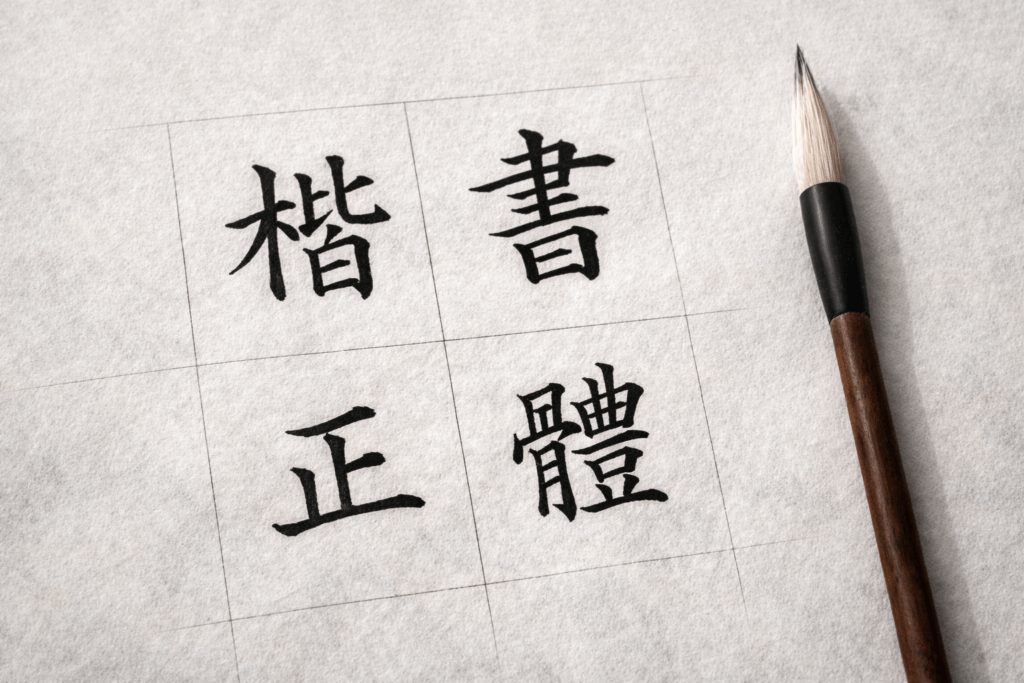
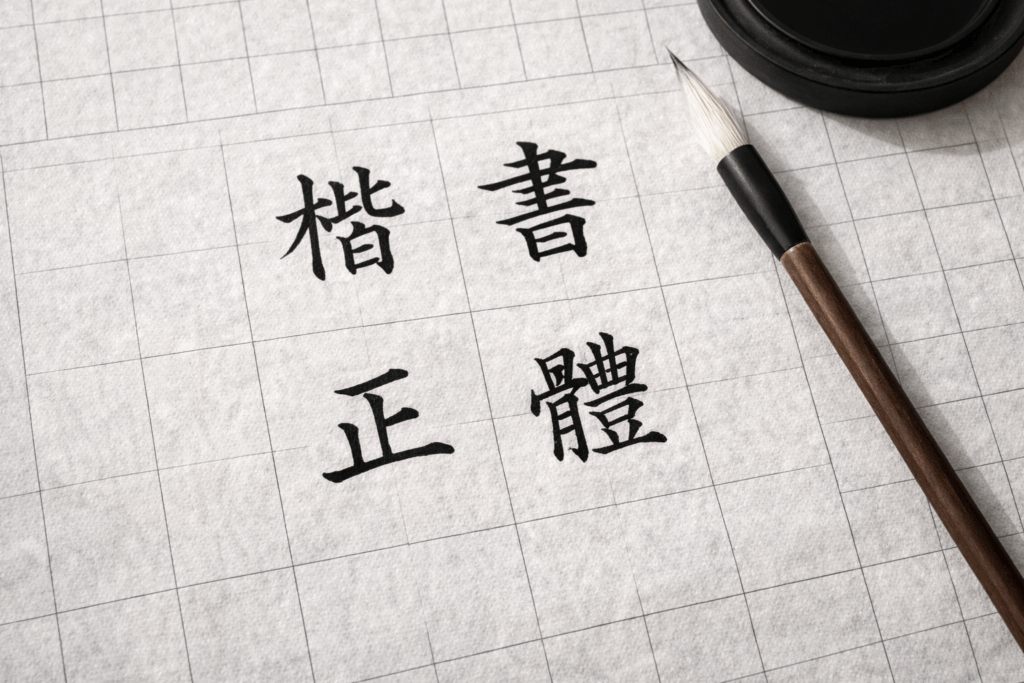
Kaishu (楷书), also known as Regular Script, is:
👉 the standard form of Chinese calligraphy
It is defined by:
- clear stroke order
- balanced proportions
- stable structure
Unlike other styles:
👉 nothing is hidden
👉 nothing is simplified
Everything is visible.
Everything is intentional.
Why Kaishu Matters (More Than You Think)
Many beginners underestimate Kaishu.
They think:
👉 “It’s too basic”
But in reality:
👉 Kaishu determines everything that comes after
Without Kaishu:
- Xingshu becomes messy
- Caoshu becomes unreadable
- structure collapses
With Kaishu:
- strokes become controlled
- characters become stable
- writing becomes intentional
👉 Kaishu is not a step.
👉 It is the root.
The Core Characteristics of Kaishu
To truly understand Kaishu—
you need to see what defines it.
1. Clear Stroke Order
Every stroke follows a strict order.
👉 This creates:
- rhythm
- consistency
- structure
2. Balanced Structure
Each character is:
- centered
- stable
- proportioned
3. Defined Strokes
Each stroke has:
- a beginning
- a movement
- an ending
Nothing is vague.
4. Controlled Movement
Speed is not the goal.
👉 control is
👉 Learn strokes →
basic brush strokes
What Makes Kaishu Difficult
Kaishu looks simple.
But it’s not.
The Challenge:
👉 There is nowhere to hide
In expressive styles:
- mistakes can blend in
In Kaishu:
- everything is visible
This forces you to develop:
- precision
- patience
- awareness
How to Practice Kaishu (Beginner to Advanced)
Let’s make this practical.
Step 1: Learn Basic Strokes
- horizontal
- vertical
- dot
- hook
👉 basic brush strokes
Step 2: Practice Simple Characters
Repeat:
- same character
- many times
Focus on:
- consistency
- balance
Step 3: Follow Copying Method (临摹)
Copy master works.
This trains:
- structure
- proportion
Step 4: Build Daily Routine
👉 calligraphy practice routine
Common Kaishu Mistakes
❌ Writing Too Fast
Kaishu requires control.
❌ Ignoring Structure
Characters become unstable.
❌ Pressing Too Hard
You lose flexibility.
❌ Inconsistent Strokes
No rhythm.
👉 Avoid more →
common calligraphy mistakes
Famous Kaishu Masters You Should Study
To improve faster—
study masters.
Ouyang Xun (欧阳询)
- precise
- sharp
- structured
Yan Zhenqing (颜真卿)
- powerful
- bold
- expressive within structure
Zhao Mengfu (赵孟頫)
- elegant
- smooth
- balanced
👉 Explore more →
calligraphy masters
Kaishu vs Other Styles
Kaishu vs Xingshu
- Kaishu = structure
- Xingshu = flow
Kaishu vs Caoshu
- Kaishu = control
- Caoshu = expression
👉 Compare deeper →
calligraphy style comparison
How Long Does It Take to Learn Kaishu?
Honest answer:
- 1 week → basic understanding
- 1 month → visible improvement
- 3–6 months → solid foundation
- years → refinement
👉 Kaishu is not fast.
👉 But it is reliable.
Kaishu and Mindfulness
Something interesting happens with practice.
You stop forcing strokes.
You start feeling them.
Each line becomes:
- slower
- clearer
- more intentional
This is why Kaishu connects with
mindfulness practice
Why Kaishu Leads to Freedom
It may sound paradoxical.
But:
👉 discipline creates freedom
Kaishu builds:
- structure
- control
- awareness
And from that—
flow emerges.
Expression emerges.
👉 Without structure—
freedom becomes chaos.
FAQ
What is Kaishu in Chinese calligraphy?
Kaishu is the standard, structured form of Chinese calligraphy, known as Regular Script.
Is Kaishu good for beginners?
Yes. It is the best starting point because it teaches structure and control.
Why is Kaishu important?
It builds the foundation for all other calligraphy styles.
How do I practice Kaishu?
Start with strokes, then simple characters, and follow a consistent daily routine.
How long does it take to master Kaishu?
It takes months to build a foundation and years to refine.
Final Reflection: The Discipline of Simplicity
Kaishu doesn’t try to impress.
It doesn’t rush.
It doesn’t hide.
It asks for one thing:
👉 attention
And in that attention—
something shifts.
You begin to see:
- how you move
- how you control
- how you think
Kaishu is not just about writing.
It is about learning how to move with intention.
Start simple.
Stay consistent.
And let the structure guide you.