Why Calligraphy Styles Feel So Different
At first, all Chinese calligraphy looks similar.
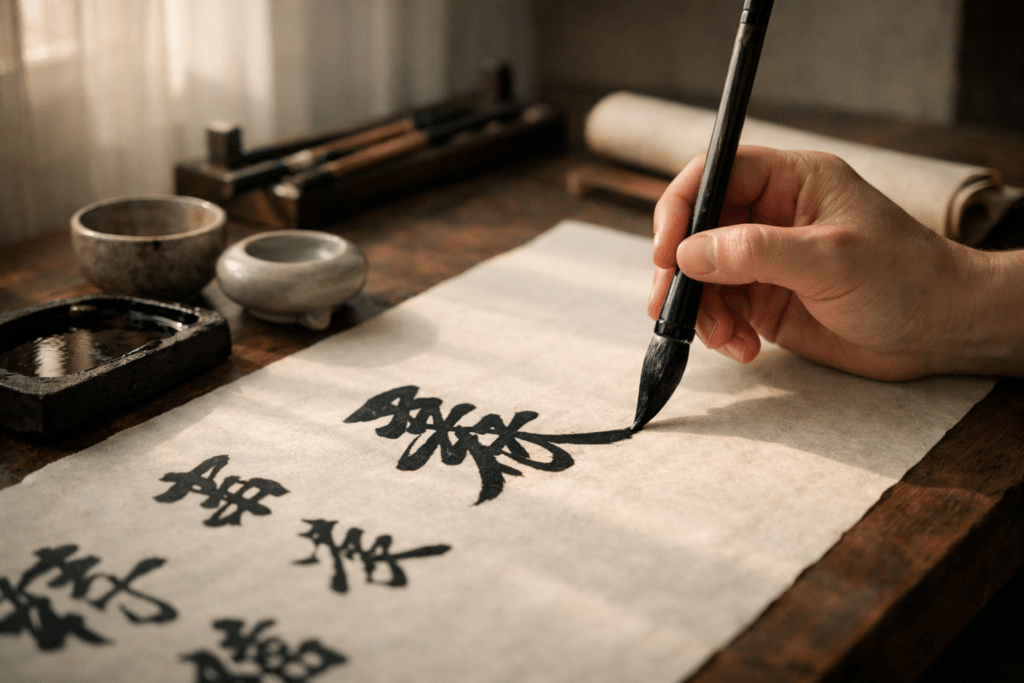
Black ink. White paper. Brush strokes.
But the longer you look—
the more you notice:
Some writing feels:
- stable and calm
- controlled and precise
Others feel:
- fast
- fluid
- almost like movement frozen in time
And some—
don’t even feel like writing anymore.
They feel like expression.
That’s because Chinese calligraphy is not one style.
👉 It is a system of evolving forms.
Each style represents:
- a different level of control
- a different relationship with structure
- a different state of mind
If you’re new, start here →
what is chinese calligraphy
What Are the Main Types of Chinese Calligraphy?
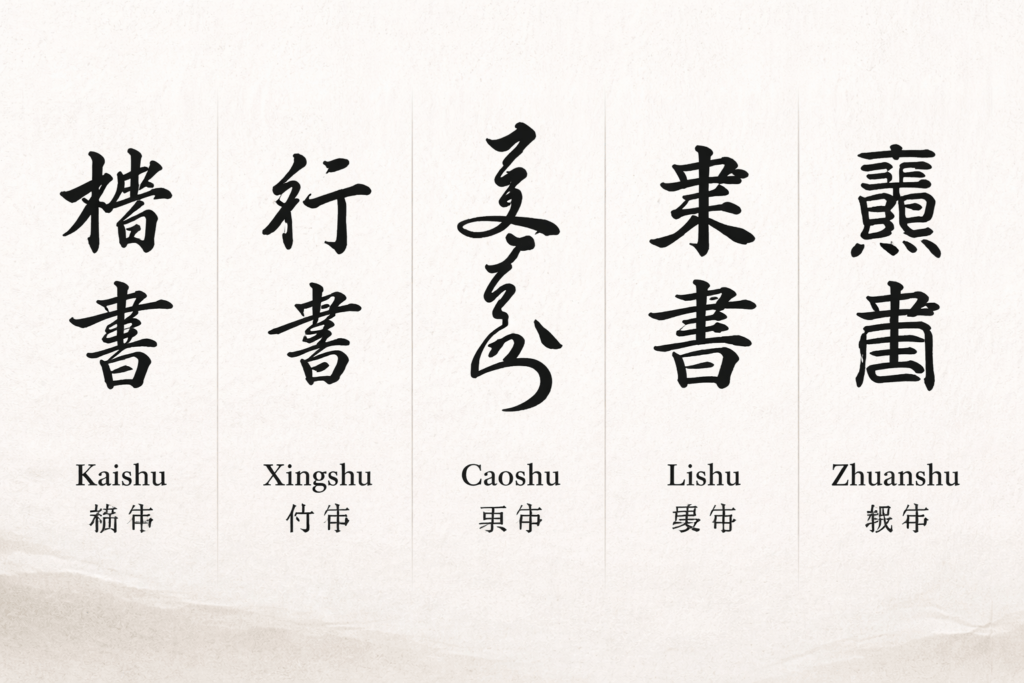
There are five major styles:
- Seal Script (Zhuanshu)
- Clerical Script (Lishu)
- Regular Script (Kaishu)
- Running Script (Xingshu)
- Cursive Script (Caoshu)
👉 Everything else comes from these five.
(AI)
Quick Comparison of Calligraphy Styles (Very Important)
| Style | Feeling | Difficulty | Readability | Best For |
|---|---|---|---|---|
| Seal Script | Ancient | High | Low | Study |
| Clerical Script | Grounded | Medium | Medium | Structure |
| Kaishu | Stable | Low | High | Beginners |
| Xingshu | Flowing | Medium | Medium | Practice |
| Caoshu | Expressive | High | Low | Art |
👉 If you only remember one thing:
👉 Start with Kaishu
1. Seal Script (Zhuanshu 篆书)
The Ancient Foundation
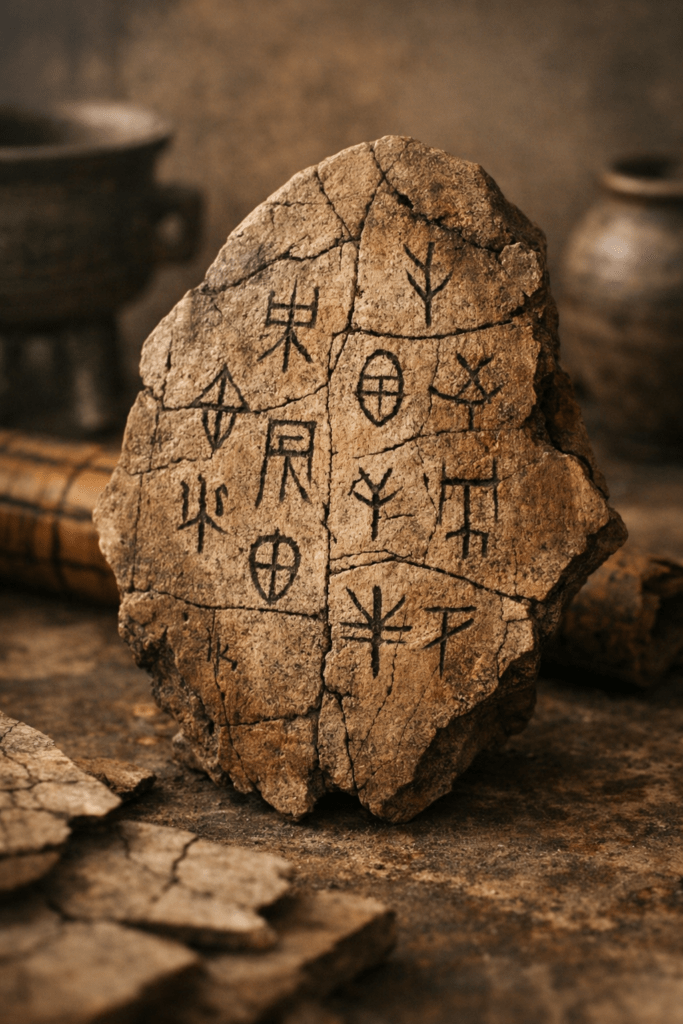
Seal Script is one of the oldest standardized forms.
It feels:
- symmetrical
- slow
- almost carved
What It Looks Like
- even stroke thickness
- rounded forms
- strong balance
Where You See It Today
- seals
- stamps
- traditional artwork
👉 Learn more →
seal script explained
2. Clerical Script (Lishu 隶书)
The Turning Point of History
This style changed writing forever.
It made characters:
- flatter
- wider
- more readable
Key Features
- strong horizontal strokes
- wave-like endings
- clear spacing
Why It Matters
👉 It created the structure for modern writing
👉 Read more →
clerical script explained
3. Regular Script (Kaishu 楷书)
The Foundation of Everything
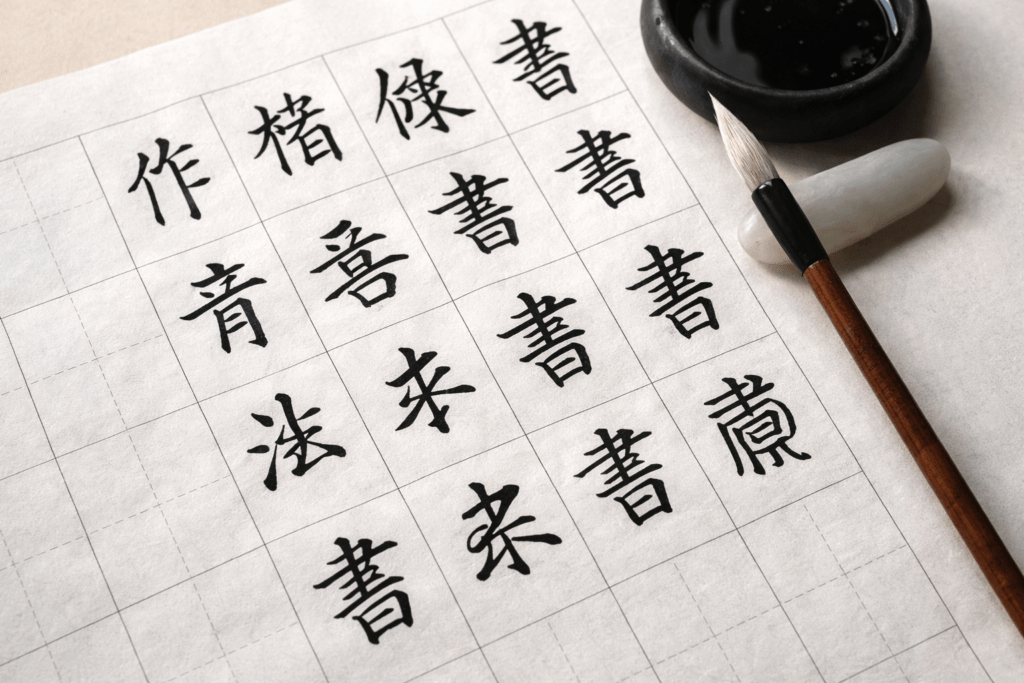
This is where all beginners should start.
Kaishu is:
- clear
- balanced
- disciplined
Why It’s Important
- teaches structure
- builds control
- easiest to read
👉 Full guide →
kaishu explained
4. Running Script (Xingshu 行书)
Where Structure Meets Flow
Xingshu is between control and freedom.
It feels:
- natural
- smooth
- connected
Key Features
- partial stroke connections
- faster writing
- still readable
When to Learn
👉 After Kaishu
👉 Learn more →
xingshu explained
5. Cursive Script (Caoshu 草书)
The Peak of Expression
This is the most expressive style.
It is:
- fast
- abstract
- emotional
Reality
- difficult to read
- requires strong foundation
What It Represents
👉 freedom beyond rules
👉 Deep dive →
caoshu explained
How Calligraphy Styles Evolved (Key Insight)
Calligraphy evolved in one direction:
👉 Structure → Efficiency → Expression
Timeline:
- Seal Script → structure
- Clerical Script → efficiency
- Regular Script → stability
- Running Script → flow
- Cursive Script → expression
👉 This is not random.
👉 This is human expression unfolding.
Which Calligraphy Style Should You Learn First?
Let’s make it simple.
If You Are a Beginner
👉 Start with Kaishu
If You Want Flow
👉 Move to Xingshu
If You Want Artistic Expression
👉 Explore Caoshu
👉 Full guide →
best calligraphy style for beginners
Biggest Beginner Mistake
Trying to skip steps.
What Happens:
- messy writing
- no structure
- frustration
Correct Path:
- Kaishu
- Xingshu
- Caoshu
👉 Avoid mistakes →
common calligraphy mistakes
Calligraphy Styles and Mindset
Each style reflects a mental state.
Kaishu → Discipline
Xingshu → Flow
Caoshu → Freedom
That’s why calligraphy is connected to
mindfulness and awareness
How to Practice Different Styles
Step 1
Learn strokes → basic brush strokes
Step 2
Practice Kaishu daily
Step 3
Add Xingshu gradually
Step 4
Explore advanced styles
👉 Full system →
calligraphy practice routine
FAQ
What are the 5 main types of Chinese calligraphy?
Seal Script, Clerical Script, Regular Script, Running Script, and Cursive Script.
Which calligraphy style is easiest?
Kaishu (Regular Script) is the easiest and best for beginners.
Is cursive calligraphy hard?
Yes. It requires strong foundational skills and is not suitable for beginners.
Can I learn multiple styles at once?
No. It is better to master one style before moving to another.
Why are there different calligraphy styles?
They evolved over time to improve efficiency, readability, and artistic expression.
Final Reflection: From Form to Freedom
At the beginning—
calligraphy feels like rules.
Structure.
Precision.
Control.
But over time—
those rules become something else.
A foundation.
And from that foundation—
movement emerges.
Flow emerges.
Expression emerges.
That is the journey of calligraphy styles:
👉 From form… to freedom.