History of Chinese Calligraphy: A Complete Guide from Ancient Origins to Modern Practice
Why Calligraphy History Matters More Than You Think
Most beginners want to start writing immediately.
They look for:
- tools
- techniques
- practice methods
But they skip something essential:
👉 where calligraphy comes from
And without that—
everything feels fragmented.
Because calligraphy is not just a skill.
It is a living tradition.
Every stroke you write today—
👉 carries thousands of years behind it.
Understanding history doesn’t slow you down.
It actually gives your practice:
- clarity
- direction
- meaning
If you’re new, begin here first →
what is chinese calligraphy
What Is the History of Chinese Calligraphy? (Simple Overview)
Chinese calligraphy is one of the oldest continuous art forms in the world.
It has evolved over:
👉 more than 3,000 years
From:
- carved symbols → to structured scripts → to expressive art
Each stage reflects:
- cultural change
- technological development
- human expression
Calligraphy is not static.
It is a record of civilization.
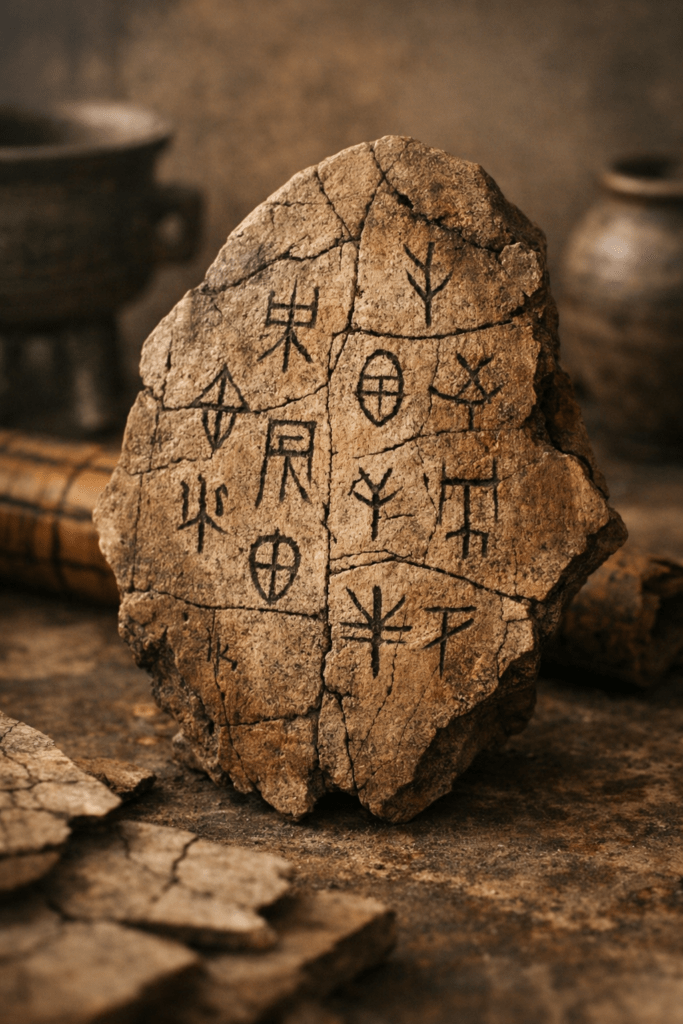
Stage 1: The Origins — Oracle Bone Script (甲骨文)
Where It All Began
The earliest form of Chinese writing appeared on:
- animal bones
- turtle shells
Used for:
- divination
- recording events
Characteristics
- carved, not written
- angular shapes
- symbolic meaning
Why It Matters
This is the root.
Everything else evolved from here.
👉 Without Oracle Script:
👉 there is no calligraphy
Stage 2: Bronze Inscriptions (金文)
As society developed—
writing moved onto bronze objects.
Used for:
- rituals
- ceremonies
- historical records
Characteristics
- more complex than oracle script
- decorative
- more stable forms
This stage marked:
👉 the transition from symbol → structure
Stage 3: Seal Script (篆书)
The First Standardization
During the Qin Dynasty—
writing was unified.
This created:
👉 Seal Script (Zhuanshu)
Characteristics
- smooth curves
- symmetrical forms
- balanced structure
Use
- official documents
- seals
- inscriptions
👉 Learn more →
seal script explained
Stage 4: Clerical Script (隶书)
The Turning Point
Clerical Script changed everything.
It made writing:
- faster
- more practical
- easier to read
Characteristics
- flat structure
- strong horizontal strokes
- wave-like endings
Why It’s Important
👉 It shaped modern writing structure
👉 Read more →
clerical script explained
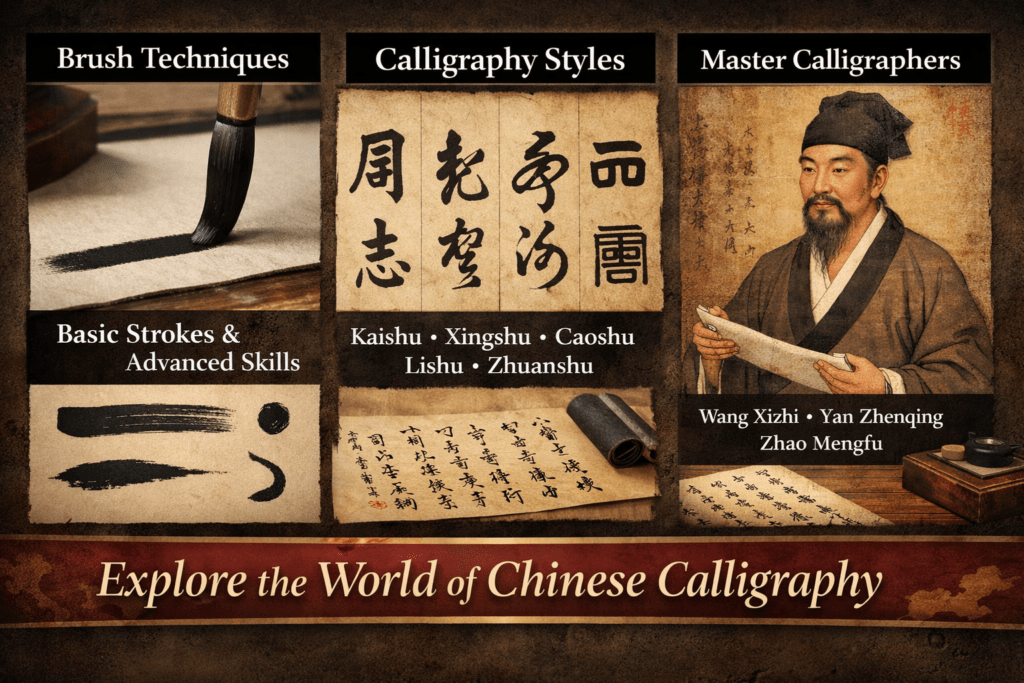
Stage 5: Regular Script (楷书)
The Foundation of All Learning
Kaishu is the most important stage.
It is:
- clear
- structured
- stable
Why It Matters
👉 All beginners start here
👉 Most printed Chinese is based on it
👉 Full guide →
kaishu explained
Stage 6: Running Script (行书)
The Balance Between Form and Freedom
Xingshu introduced flow.
It is:
- smoother
- faster
- more expressive
Use
- personal writing
- letters
- daily use
👉 Explore →
running script explained
Stage 7: Cursive Script (草书)
The Peak of Expression
This is where calligraphy becomes pure art.
Characteristics
- highly abstract
- fast movement
- emotional expression
Reality
👉 Difficult to read
👉 Requires strong foundation
👉 Deep dive →
cursive script explained
The Evolution Path (Important Insight)
Calligraphy evolved in a clear direction:
👉 Structure → Efficiency → Expression
Timeline:
Oracle → Bronze → Seal → Clerical → Regular → Running → Cursive
This is not random.
It reflects:
👉 how humans moved from control to freedom
Calligraphy Through Dynasties
Different eras shaped different styles.
Han Dynasty
- development of Clerical Script
Tang Dynasty
- peak of Regular Script
- technical perfection
Song Dynasty
- artistic expression increased
Yuan / Ming / Qing
- diversification
- personal styles
👉 Learn deeper →
calligraphy dynasties
The Role of Calligraphy in Chinese Culture
Calligraphy was never just writing.
It was:
- education
- identity
- self-cultivation
In ancient China:
👉 A scholar was judged by his calligraphy
It was considered:
👉 a direct reflection of character
Calligraphy and Philosophy
Calligraphy is deeply connected to:
- Confucian discipline
- Daoist flow
- Zen awareness
It embodies:
- balance
- harmony
- impermanence
👉 Related →
calligraphy philosophy
Calligraphy in the Modern World
Today, calligraphy still exists.
But its role has shifted.
Now it is:
- art
- personal practice
- cultural heritage
In a digital world—
calligraphy offers:
👉 a return to slowness
What This Means for Beginners
Understanding history changes how you practice.
Instead of random strokes—
you begin to see:
👉 where each style comes from
👉 why it exists
👉 how it connects
👉 Start here →
calligraphy beginner guide
FAQ
How old is Chinese calligraphy?
Chinese calligraphy dates back over 3,000 years to oracle bone inscriptions.
What is the oldest form of Chinese writing?
Oracle Bone Script is the earliest known form.
Why did calligraphy styles change over time?
They evolved to improve efficiency, readability, and artistic expression.
Which dynasty influenced calligraphy the most?
The Tang Dynasty is considered the golden age of calligraphy.
Is calligraphy still used today?
Yes, mainly in art, culture, and personal practice.
Final Reflection: Writing Across Time
When you write a stroke today—
it may feel small.
Simple.
Even insignificant.
But that stroke—
has a history.
From bone carvings…
to ink on paper…
to your hand.
Calligraphy is not just something you learn.
It is something you join.
A quiet tradition—
still moving.
Still alive.