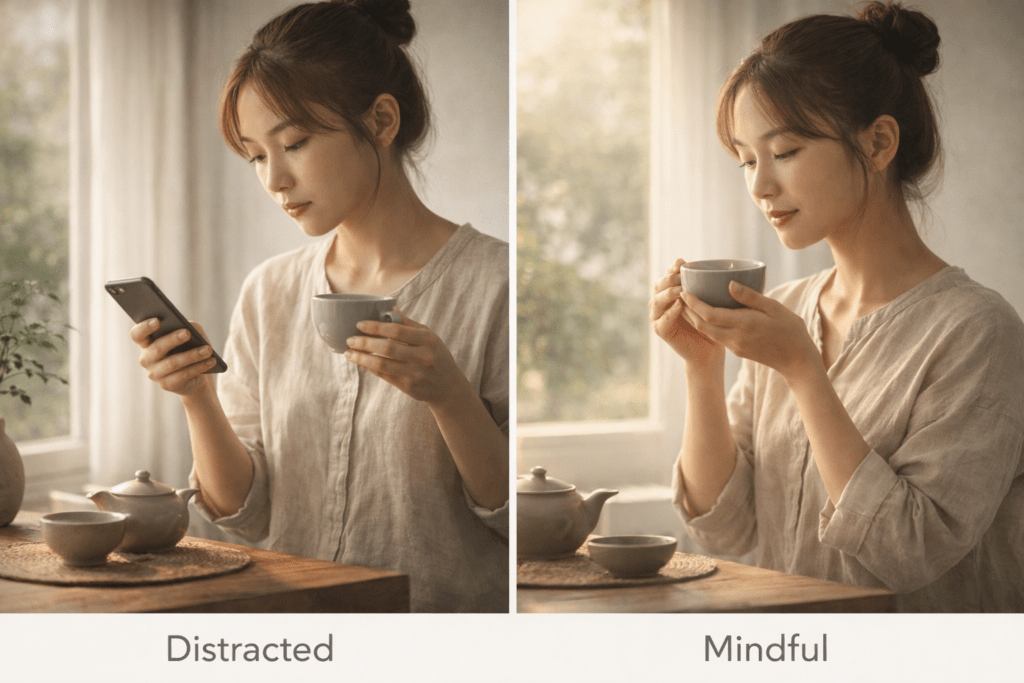
Zen vs Buddhism: What’s the Difference?
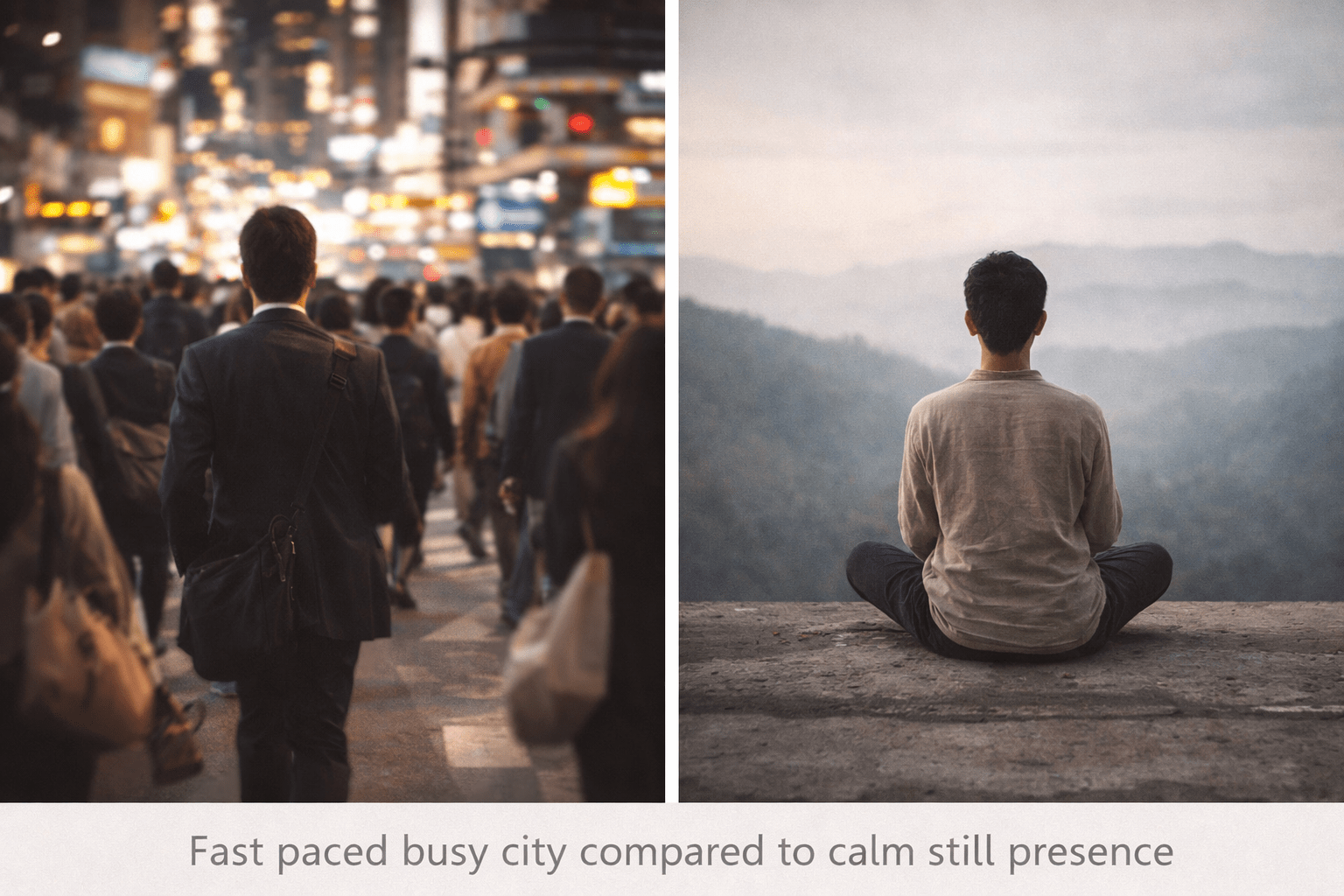
Most people think Zen and Buddhism are the same.
They are not.
Zen comes from Buddhism.
But Zen is not the same as Buddhism.
That distinction is where most confusion begins.
If you don’t understand this difference,
you will misunderstand both.
So let’s make it very clear.
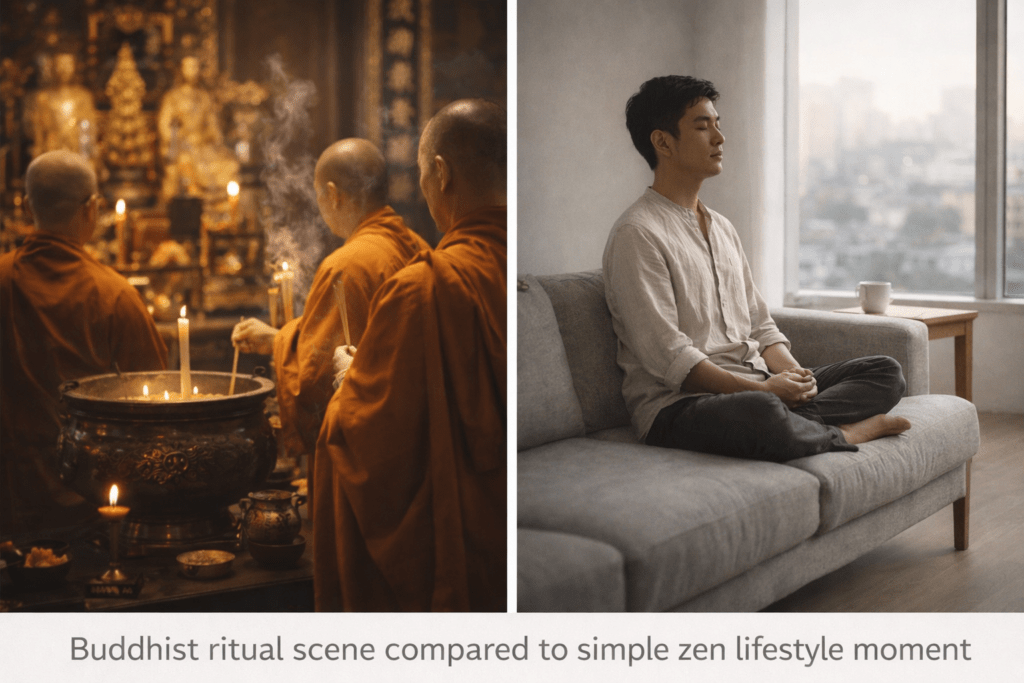
Buddhism: A Complete System
Buddhism is a full path.
It includes:
- philosophy
- ethics
- rituals
- teachings
- practices
It answers big questions:
- Why do we suffer?
- What is the nature of reality?
- How do we become free?
It provides structure:
- The Four Noble Truths
- The Eightfold Path
- Karma
- Rebirth
Buddhism is:
👉 a complete framework for life and liberation
You can study it.
You can follow it.
You can belong to it.
Zen does something very different.
Zen: Direct Experience
Zen removes almost everything.
It doesn’t emphasize:
- complex theory
- belief systems
- intellectual understanding
Instead, Zen asks:
👉 Can you see directly?
Not think.
Not analyze.
See.
This is why Zen often feels strange.
Because it does not behave like a system.
It behaves like a shortcut.
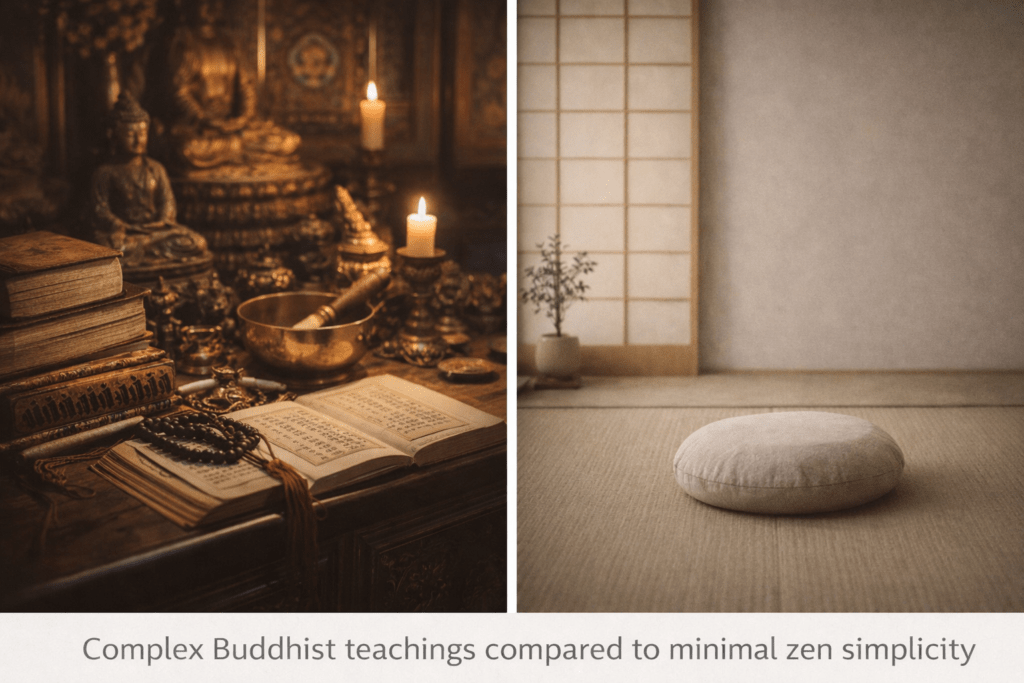
The Core Difference (Simple Version)
You can understand it like this:
👉 Buddhism explains reality
👉 Zen points to reality
Buddhism uses:
- teachings
- concepts
- explanations
Zen uses:
- silence
- experience
- direct awareness
One builds understanding.
One dissolves it.
Why Zen Rejects Over-Explanation
There is a famous Zen idea:
👉 “The finger pointing at the moon is not the moon.”
Teachings are the finger.
Reality is the moon.
Buddhism often studies the finger.
Zen says:
👉 stop looking at the finger
👉 look at the moon
This is not anti-Buddhism.
It’s a different emphasis.
Zen Is Still Buddhism (But Not in the Way You Think)
Historically:
Zen comes from Mahayana Buddhism.
It began in China (Chan Buddhism),
then moved to Japan (Zen).
So technically:
👉 Zen is a branch of Buddhism
But practically:
👉 Zen feels very different
Because it removes layers.
Buddhism Builds Understanding
In Buddhism, you learn:
- impermanence
- non-self
- suffering
You study.
You reflect.
You deepen understanding.
This is valuable.
Because the mind needs direction.
Zen Breaks the Mind
Zen does something radical.
Instead of building knowledge…
👉 it breaks your reliance on knowledge
It uses:
- paradox
- silence
- direct experience
To push you beyond thinking.
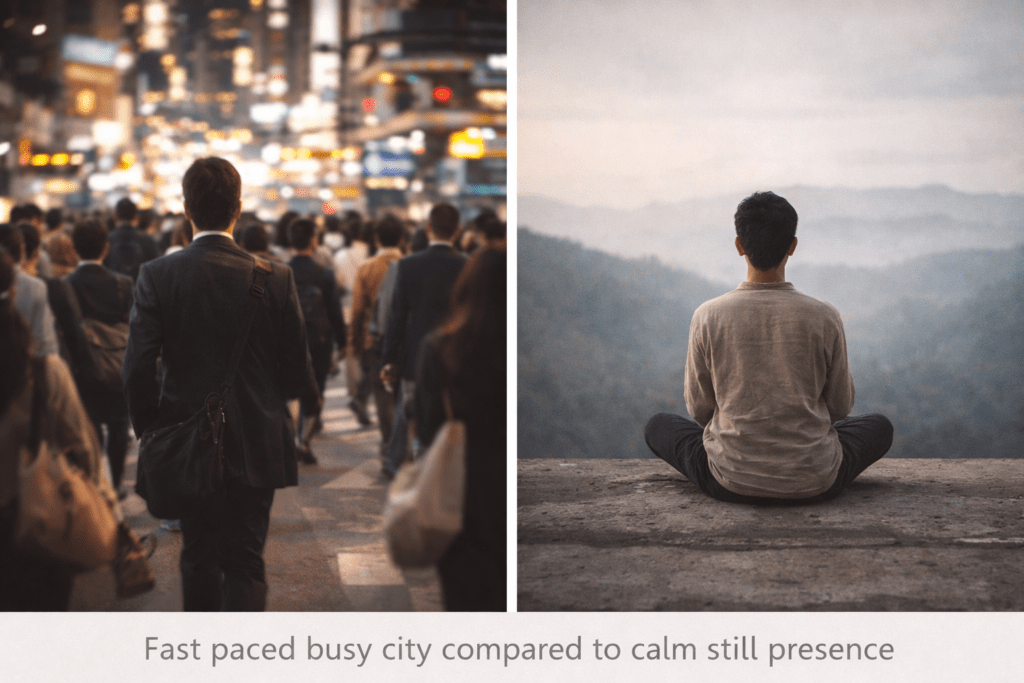
Koans: The Zen Method
Zen uses strange questions called koans.
Example:
👉 “What is the sound of one hand clapping?”
This is not a riddle.
It cannot be solved logically.
Its purpose is:
👉 to exhaust thinking
When thinking fails…
👉 something else appears
That “something” is direct awareness.
Belief vs Experience
Buddhism can involve belief:
- karma
- rebirth
- cosmology
Zen doesn’t focus on belief.
Zen asks:
👉 What is true right now?
Not in theory.
In experience.
Structure vs Freedom
Buddhism often provides:
- rules
- structure
- guidance
Zen removes structure:
- no fixed form
- no rigid system
That freedom can feel:
- liberating
- or confusing
Because without structure:
👉 you must see for yourself
Why Zen Feels Difficult
Not because it is complex.
But because it is too simple.
The mind wants:
- explanation
- certainty
- steps
Zen gives none of that.
It gives:
👉 immediacy
Which the mind cannot control.
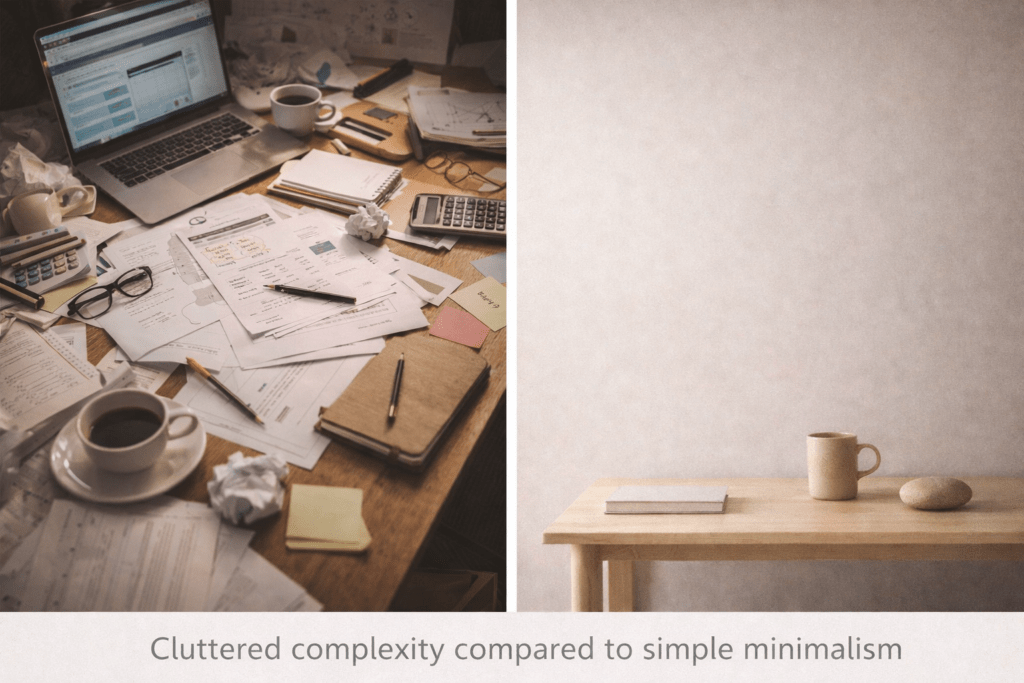
Zen in Daily Life vs Buddhism in Practice
Buddhism often looks like:
- temples
- rituals
- chanting
Zen can look like:
- drinking tea
- walking
- sitting quietly
Not because Zen avoids depth.
But because:
👉 it brings depth into ordinary life
Which One Should You Follow?
This is the wrong question.
Because Zen and Buddhism are not competing.
They serve different roles.
👉 Buddhism gives direction
👉 Zen gives realization
Some people need structure first.
Some people resonate with directness.
Both are valid.
A Simple Analogy
Imagine learning music.
Buddhism is:
👉 studying theory
Zen is:
👉 playing the instrument
You can study forever…
But at some point:
👉 you must play
The Deeper Truth
Zen is not against Buddhism.
Zen is:
👉 what remains when everything unnecessary is removed
No extra ideas.
No extra layers.
Just:
👉 direct experience
Final Insight
If you remember only one thing:
👉 Buddhism teaches you about reality
👉 Zen asks you to see it now
Not later.
Not after understanding.

Continue the Journey

Zen vs Buddhism: What’s the Difference?
Most people think: 👉 Zen = Buddhism This is not wrong. But...

How Zen Changed the Way People Think
Most people don’t realize this. Zen didn’t just influence meditation. It changed:...

The Core Principles of Zen Explained Simply
Zen looks simple. Too simple. So simple that most people miss it....